Homemade herbal tinctures: My favorite DIY natural medicine!
Disclosure: I am an Amazon affiliate and this post contains affiliate links, which means I may earn a commission (at no extra cost to you) if you purchase products mentioned.
Today I am very excited to write about my homemade herbal tinctures!
I started making my own herbal tinctures back in 2021 when my autoimmune healing journey started. For more on that, check out my article here with the full story!
Ever since then, I’ve found tinctures to be the most effective way to make my own natural medicine. Not to mention, they are cost-efficient and super easy to make!
While I’m certainly no expert when it comes to tinctures, I want to share with you guys what I know, how I use them, why I opt to use them, etc.
Let’s jump in!
Disclaimer: Of course none of this is to be seen as medical advice; this is simply me sharing my experience to hopefully give you guys a starting point for doing your own research, making your own tinctures, etc.! ♥
What are herbal tinctures?
For those of you that haven’t ever heard of herbal tinctures, I want to give you a brief overview!
Basically, a tincture is any preparation of plant material that has been soaked long-term in some sort of medium which can extract its properties. Common mediums include alcohol, water, vinegar, and glycerin (or a combination thereof). In this article, I will be discussing alcohol tinctures, since that’s the medium I use!
Certain constituents of certain plants will be extracted more effectively by different mediums, so it can sometimes be more advantageous to use a different medium depending on the plant.
But it’s basically that simple: You soak the herbs (dried or fresh!) in the medium (usually alcohol and water), leave it for a while (think months), and the medicinal properties of the plant end up in the liquid! It’s pretty incredible.
Certain tinctures turn really cool colors as a result of this extraction process, and not always as you’d expect! White willow bark, for example, looks very tan and yellowish, yet the extracted liquid is a deep red color! See?
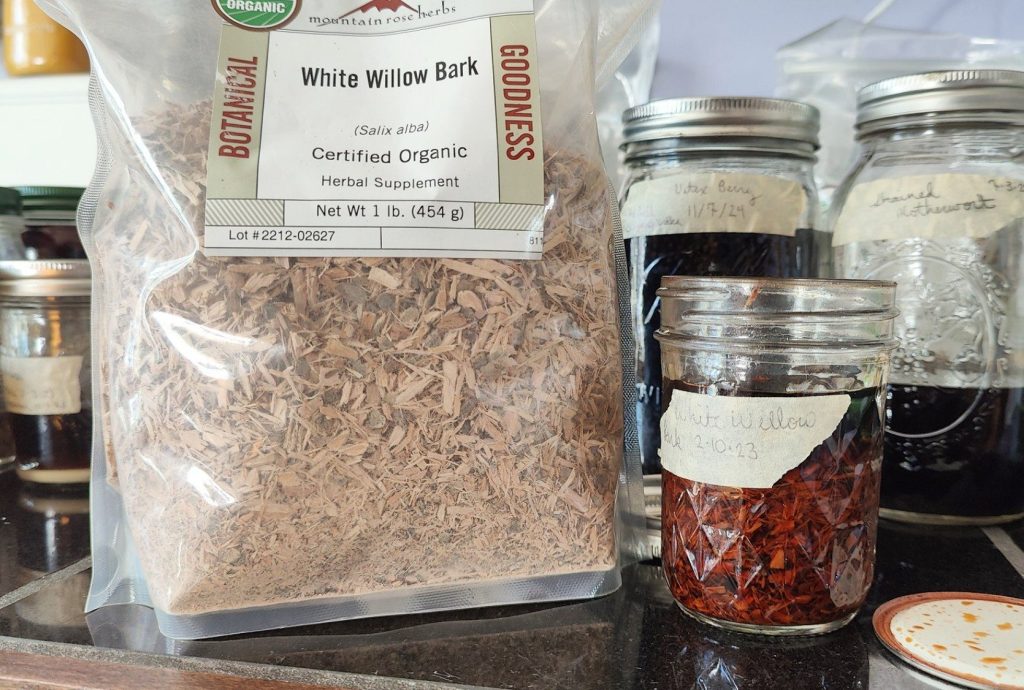
Tinctures are a form of medicine that have doubtlessly been in use for thousands of years. They’re simple to make and they also happen to be one of the most effective ways to take herbs as medicine!
Why herbal tinctures are so darn effective!
When I think of herbal medicine, I tend to think either of (1) dried herbs inside capsules or (2) tinctures. At least these are the ways I’ve taken herbs!
And I’ve come to really understand that tinctures are far superior to taking dried herbs in capsule-form, and there are a few reasons for this.
Here is my understanding: Since an herb’s properties are already extracted into a given tincture, that tincture has already done a lot of the digesting work for you over a long period of time! As a result, the medicinal parts of the plant are suspended in liquid and super bioavailable to your body once consumed. Compared to taking a dried whole herb, letting it hit your stomach acid, and hoping it gets absorbed and used by your body, tinctures really perform on a whole different level!
Moreover, alcohol happens to be absorbed very easily by our bodies. Certain tinctures can even be held under the tongue for more immediate effects, demonstrating the fast-acting nature of alcohol and how quickly it enters our bloodstream (along with the medicinal properties the plants have lent it!).
In all, I view tinctures to be a much more concentrated and more bioavailable form of plant medicine for this reason. Especially for those of us who have gut issues (raising my hand!), tinctures can better ensure that we’re actually receiving the medicinal properties of a plant when we take them.
Why making homemade herbal tinctures is super easy
With all of this talk about why tinctures are so effective, you’ll be happy to know that the process of making them is SUPER straightforward, simple, and requires very little equipment.
When I started making my own tinctures, I used Mountain Rose Herb’s guide on how to do it, which is a fantastic resource. I also purchased my herbs from them, as they are super high quality and they offer organic options.
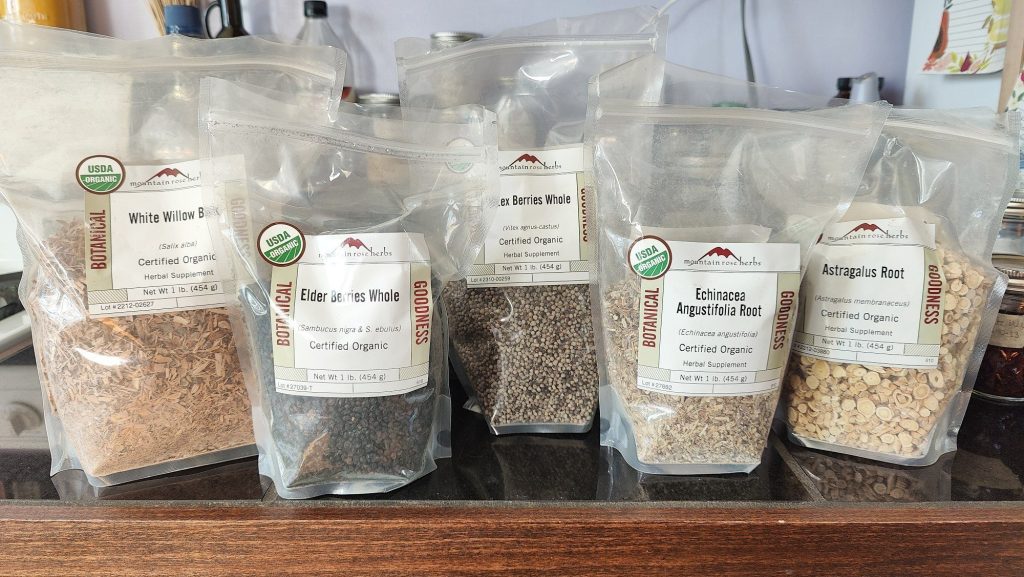
Their prices have, unfortunately, gone up in recent years (what prices haven’t?!) but, thankfully, I already have a nice stock of dried herbs that I bought years ago so I haven’t had to purchase any too recently!
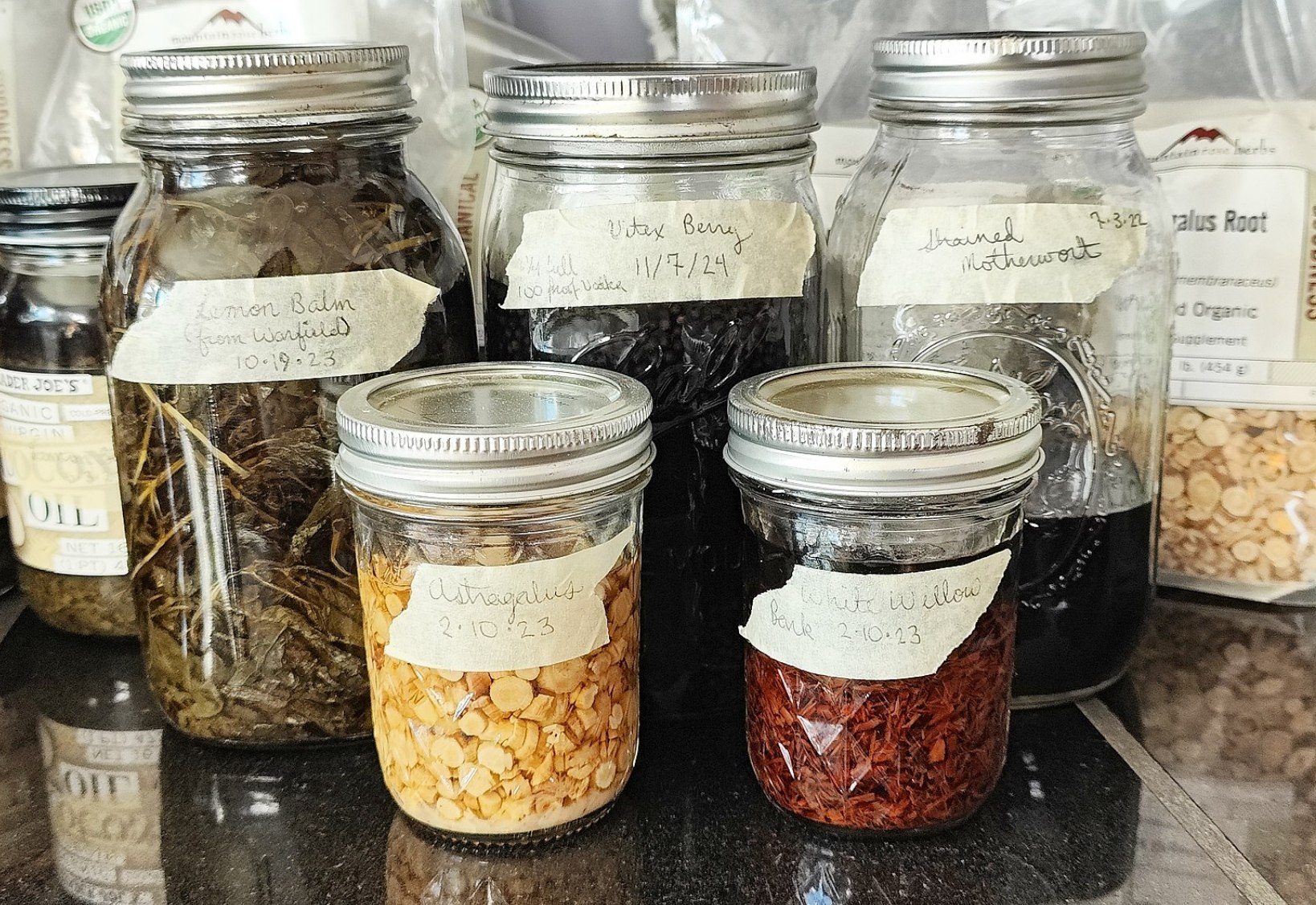
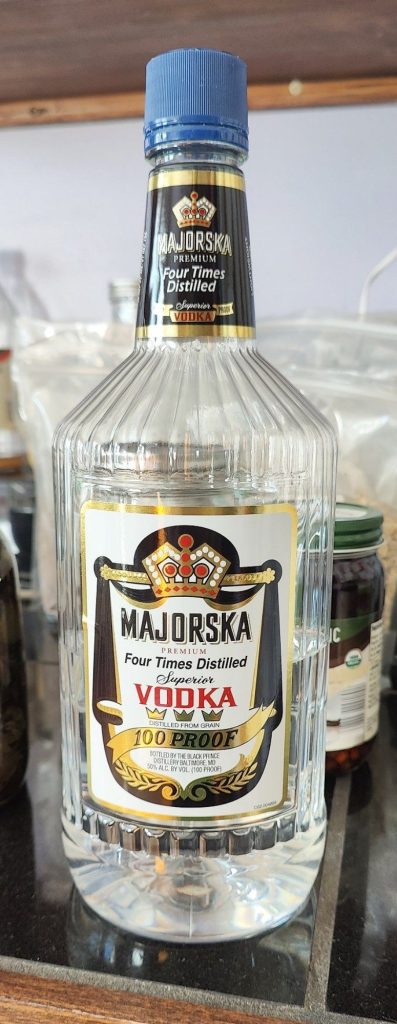
The basic idea with making tinctures is you buy dried plant material (chopped pieces are better than powders, as it is much harder for companies to adulterate/fake such products), put it in a mason jar, cover it in alcohol (100 proof vodka in my case), and leave it in a dark place for around six weeks before you strain the liquid into dropper bottles and use it.
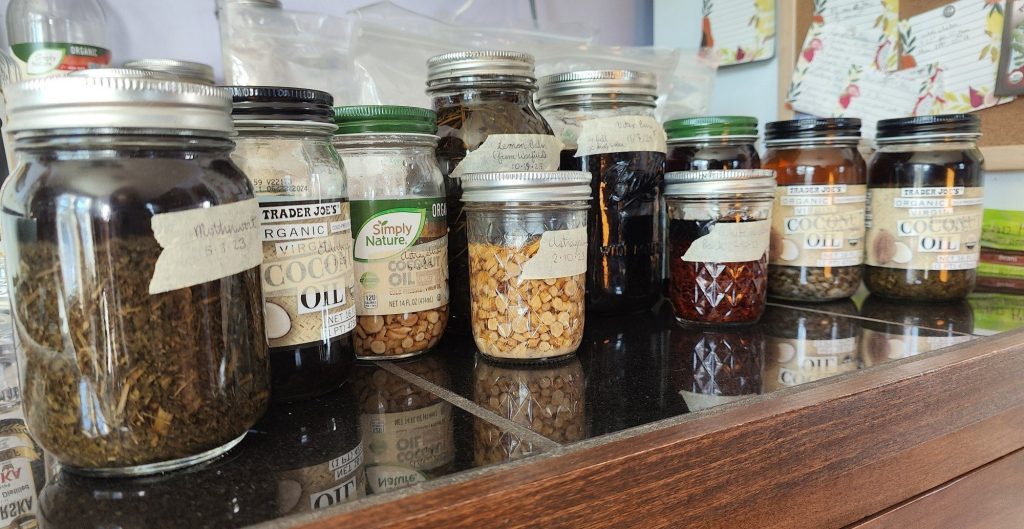
You can also leave the tincture MUCH longer if you want a stronger one! They will keep for years on end, so you needn’t worry about them expiring.
It is also possible to use fresh plant material, but a higher strength alcohol is required (due to the presence of water in the fresh plant which will dilute the alcohol).
And it’s really that simple! Honestly, for me the hardest part is going to the liquor store, since I don’t drink. I always feel weird going in there and buying vodka! Once I even awkwardly told the cashier I was using it to make tinctures, because I didn’t want to be seen as someone who drinks, lol!
How making homemade herbal tinctures saves you a TON of money
One of the driving reasons for why I do a lot of things is, of course, to save money! Especially in today’s expensive world!
I’d almost always prefer to do something myself if it will save me a significant amount of money. And homemade herbal tinctures definitely fit the bill!
It’s actually crazy how expensive tinctures are. Initially, I did buy them, because I didn’t have time to buy the dried herbs and wait six weeks for their tinctures to be ready. But when I started making my own, though I did have to invest in the dried herbs, they have lasted me such a long time!
Each bag of dried herbs you buy will render bottles of tinctures of that herb. And though it’s also true that the alcohol itself can be quite expensive, that too goes a long way!
I haven’t done the actual math on how much I save by making my own tinctures, but I can definitely assure you its a significant amount. And of course it does depend on the specific herb you’re looking for.
But with how easy it is to make tinctures, it’s simply a no-brainer to make them myself!
The super shelf-life of herbal tinctures
Another fantastic thing about tinctures is that they basically keep indefinitely. Some say they expire after five years or so, and I actually haven’t really gotten to that point with any of my tinctures yet, lol, so I can’t attest to whether that’s true!
But the point here is that their shelf life is pretty incredible. It is important to keep them in a dark place, of course, and I have a designated cupboard for this purpose.
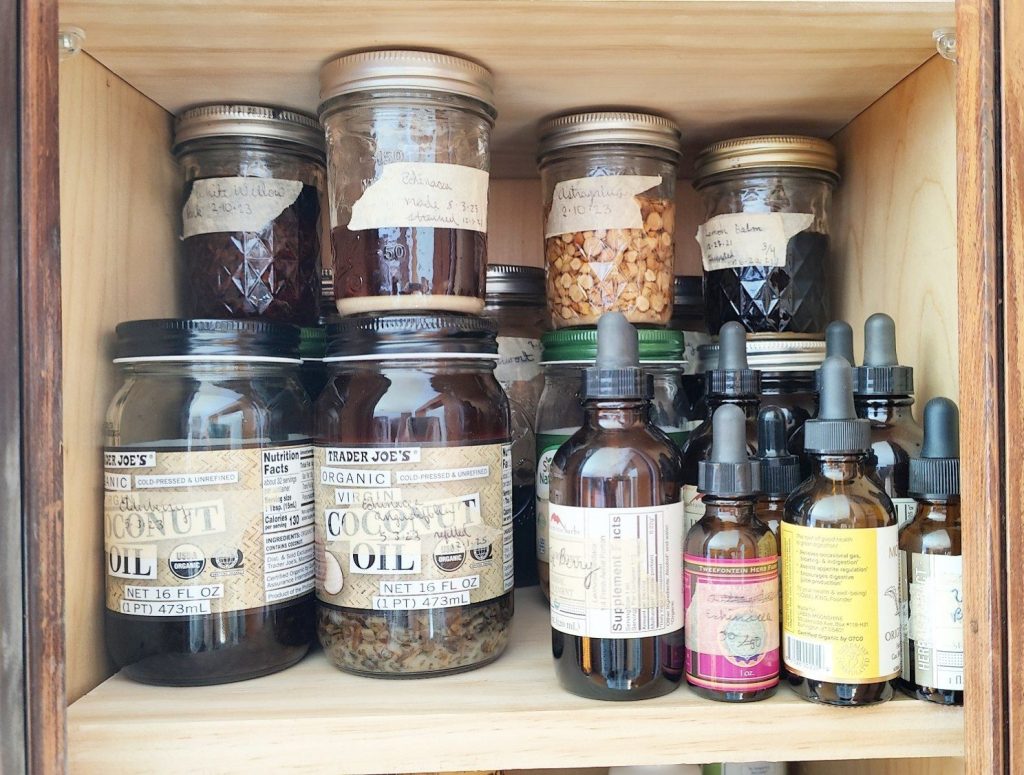
It’s a great feeling, though, to be able to make plant medicine and not have to worry about it expiring. This enables me to prepare tinctures that I might need, such as immune herbs like echinacea, elderberry, and astragalus, and know they’ll be there when flu season hits!
What tinctures I’ve made and how they’ve helped me
Though I’ve only been making tinctures for the past five years or so, I’ve dabbled in making quite a few different ones!
My first tinctures: Hawthorn and motherwort
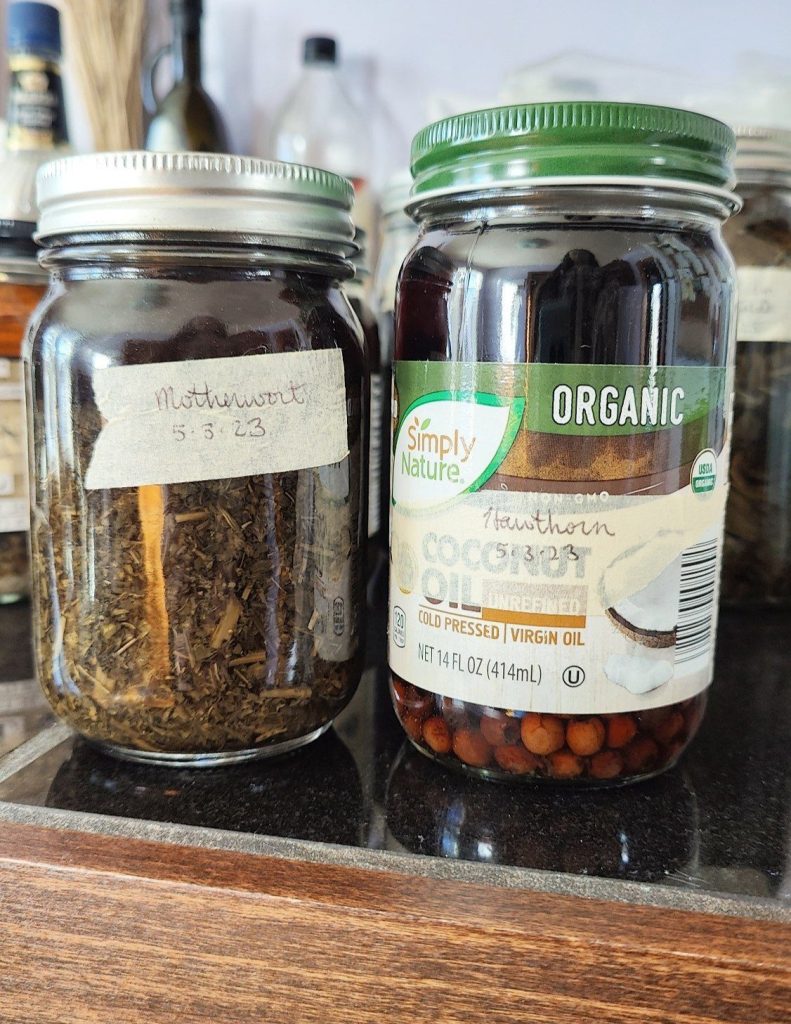
My very first homemade herbal tinctures were those made from hawthorn berries and motherwort leaves, both dried. These two herbs seemed to quell my first episode of hyperthyroidism (which I didn’t yet know I had) and help my heart become regular again, and I sought them out for this very purpose.
Lemon balm: For my cold sores!
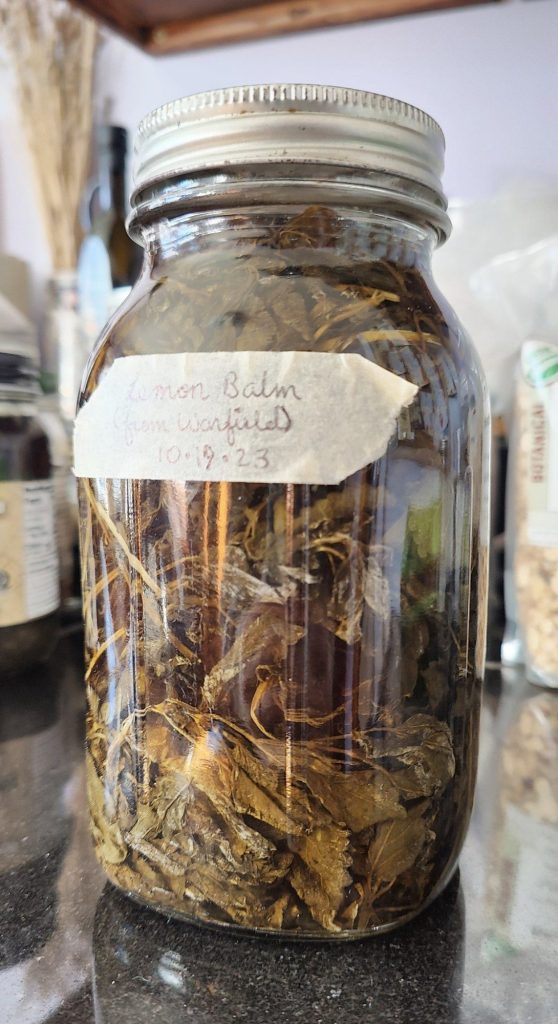
After this, I became interested in lemon balm as a result of reading, in the late Stephen Buhner’s book, Herbal Antivirals, how it can purportedly act as an antiviral, especially against cold sores (the herpes virus). I have been plagued with cold sore outbreaks my entire life, so I thought, hey, why not give it a try? I sometimes even apply this tincture directly to my lips during an outbreak. Plus, my mom has lemon balm in her garden, so I was able to take some home and make a tincture from that!
Echinacea, elderberry, and astragalus: To help fight those pesky viruses!
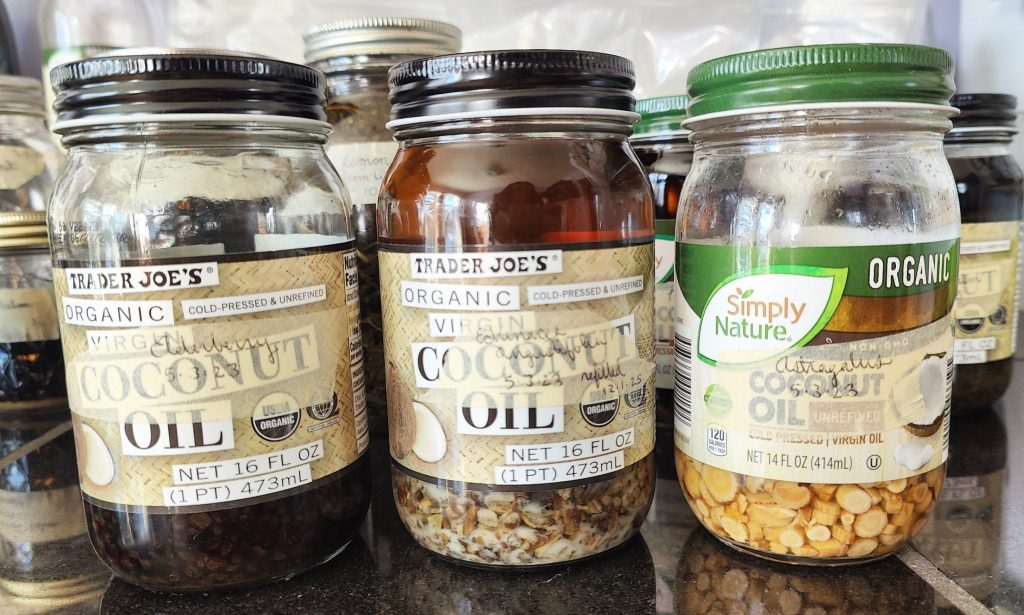
And of course, it made sense to begin making tinctures for immunity during the flu and cold season, as I inevitably catch something each year. My best friend, who is the one who really got me into herbs to begin with, recommended echinacea (angustifolia), elderberry, and astragalus for immune-boosting properties. I make sure I always have tinctures of these herbs on-hand and ready to go! The echinacea has distinguished itself as being the most valuable of the three, as it has this strange ability to numb my throat when it is either itchy or sore. It also makes my entire mouth tingle and salivate upon taking it. It’s a weird one!
White willow bark: Nature’s aspirin
Another herb I’ve made a tincture from is white willow bark, which is known as nature’s aspirin. In fact, this is the herb from which aspirin is actually derived! It is good to have on hand for its natural pain-alleviating effects, and is more well-rounded than commercial aspirin since it contains a plethora of other plant constituents and compounds which help to balance its actions.
Vitex berries: To support my (female) hormones
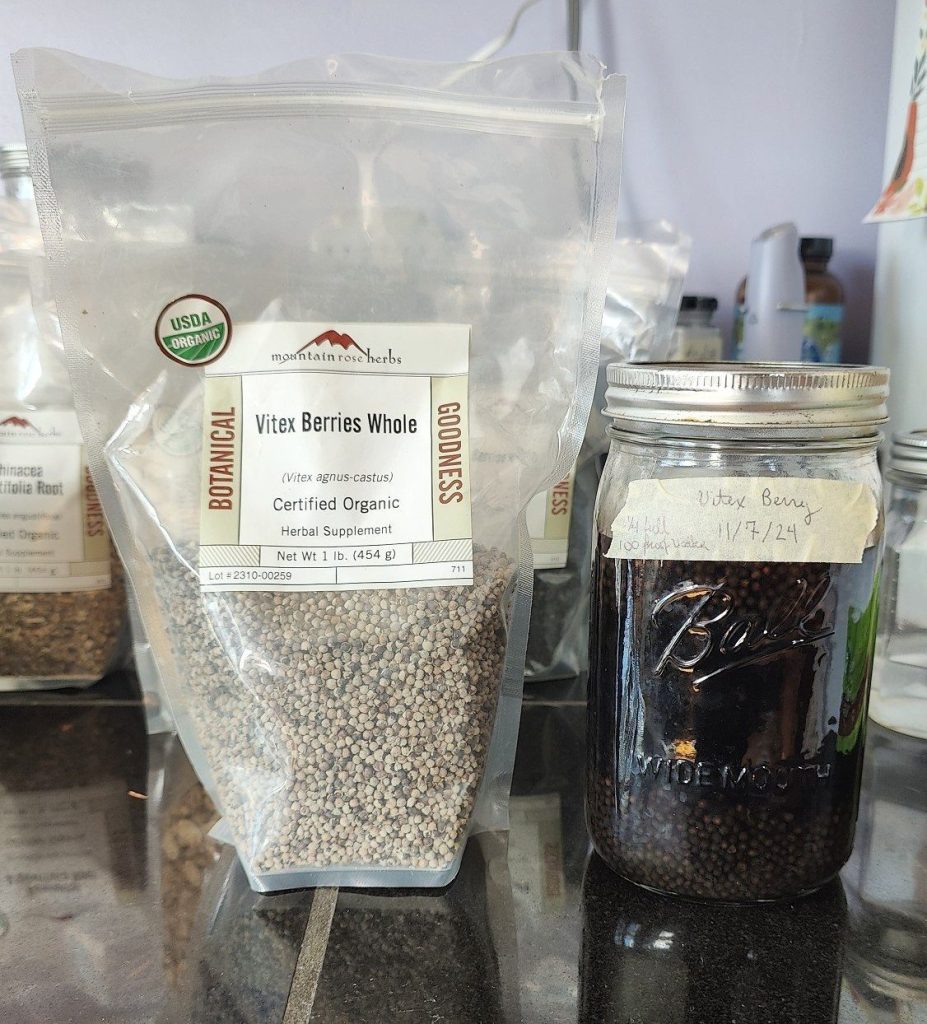
Lastly, I have made a tincture from vitex berries, as I was taking a vitex supplement at the time and grew tired of shelling out the money for it, hah! Though I don’t take it anymore (I’m experimenting with balancing my hormones in different ways), it was a cheap and efficient way of making my own herbal preparation of the hormone-supporting herb! Many women greatly benefit from taking vitex and it was something my natural doctor recommended to me.
I hope you’ve enjoyed this little list of the tinctures I’ve made on my health journey thus far. In truth, there are so many herbs from which you can make your own tinctures, each with their own amazing potential healing benefits! The world is your oyster, so start exploring which ones might best suit you!
Conclusion
Making homemade herbal tinctures is definitely one of those things that makes me feel more like a human being, something I am always interested in! (Hence my website name!)
And I love learning new skills, especially ones which are super time-tested and old-fashioned, such as making my own tinctures. It helps me feel like I’m getting back to basics and doing things like our ancestors did.
Plus, it’s such a wholesome feeling to be able to take medicine you made yourself. I really hope to start growing my own herbs one day, so I can really feel like I have a hand in the process from start to finish!
I really hope some of you feel inspired to learn how to make your own homemade herbal tinctures! If you have any questions, please feel free to leave me a comment below and I’ll do my best to help! Plus, I’d love to hear about any of your experiences with making tinctures and how they might have helped you!
Wishing you all the best of health and greatest success in your DIY endeavors!