My lovely collection of antique and vintage sewing machines!
Today, I’m super excited to write about my beloved collection of antique and vintage sewing machines!
Okay, I’ll admit, I don’t have like a TON of machines, but I do have four which I absolutely love! One of them is even an antique treadle machine!
And the funny thing is, I acquired all of these machines for free! I’m going to tell you guys the story about how I got each of them and why they have each earned a place in my sewing machine arsenal. They all do something slightly different which warrants keeping them around!
And if you’re wondering why I don’t use modern machines… well, it’s because I can’t stand stuff that’s made in China and breaks!
Let’s dive in!!
Related: Why old/vintage items are better than their modern equivalents! Plus the few cases that they aren’t
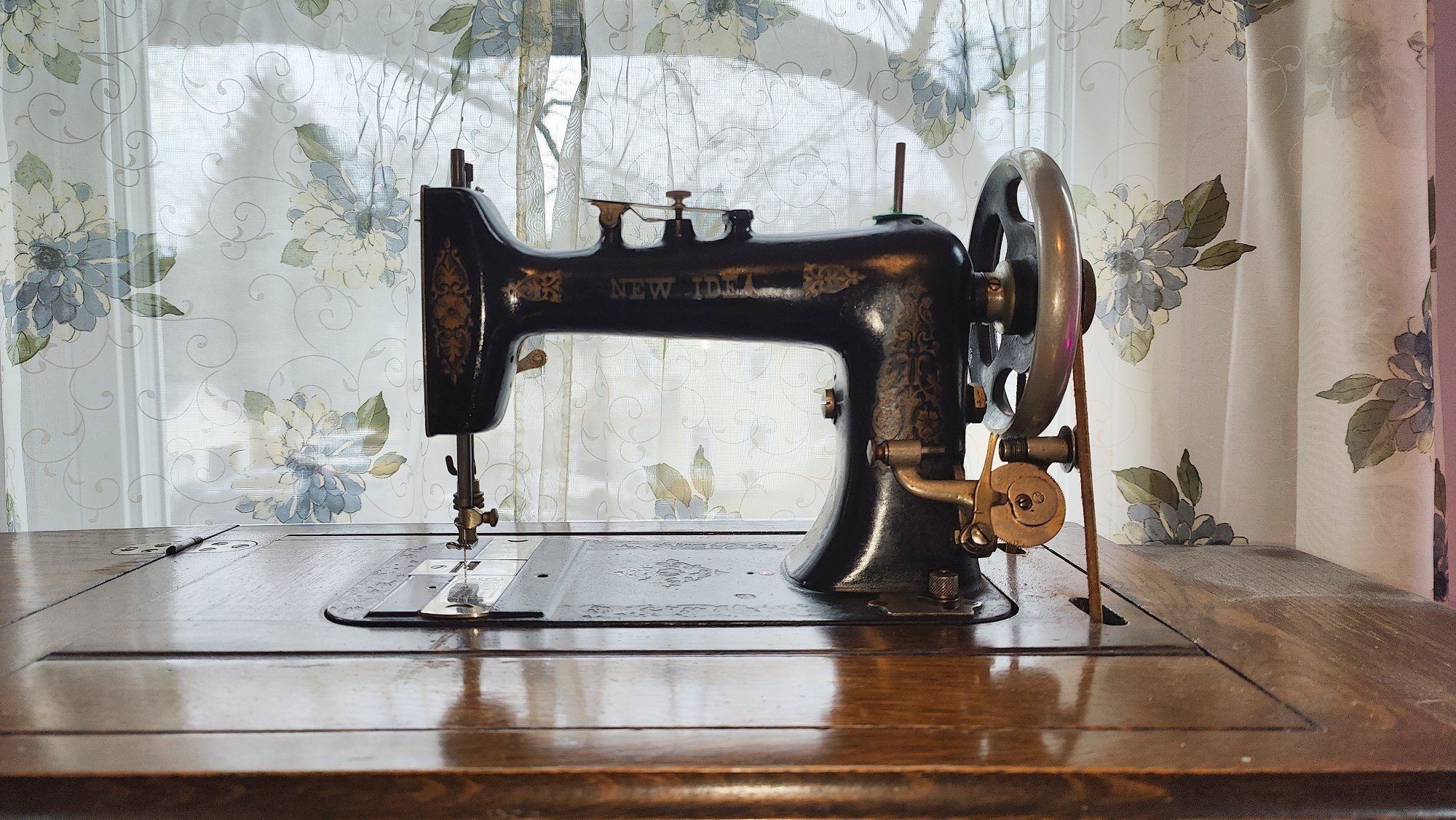
#1: My antique treadle sewing machine
Possibly my favorite machine to show-and-tell when people come over is my antique treadle machine.
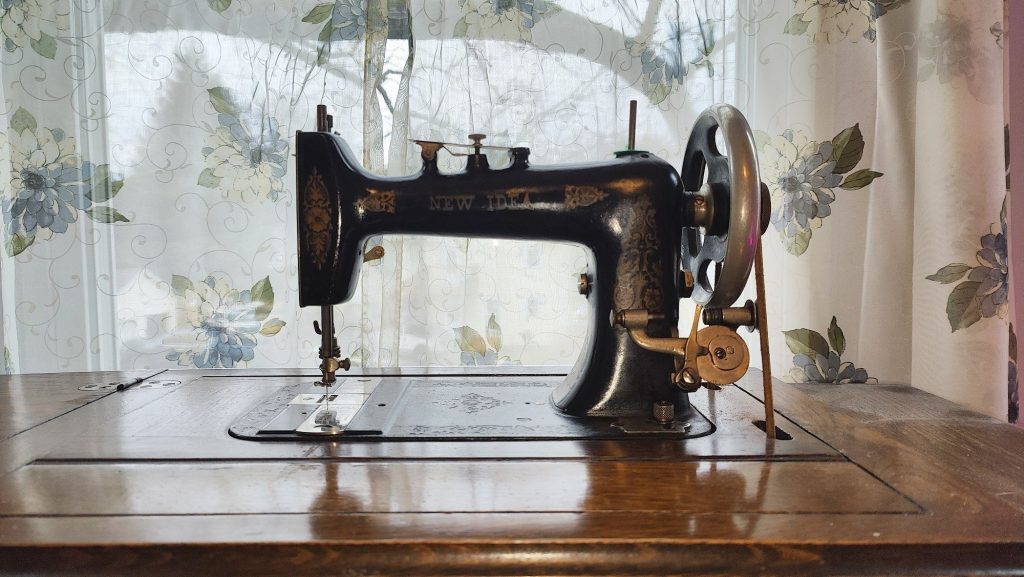
It was a sunny summer day when we were at my brother-in-law’s house. He told us there was a tag sale down the road which had a ton of cool stuff! So we took the walk down there and found a bunch of great tools for super cheap, plus… I happened to spot two antique sewing machine tables!
I inquired about them and the man told me they were free because he got them for free. He’d intended on restoring them, but since he was moving he never ended up having the time. He did warn me the machines themselves didn’t work.
Well, I jumped on that, mostly because I wanted a sewing table! I took this beauty home!
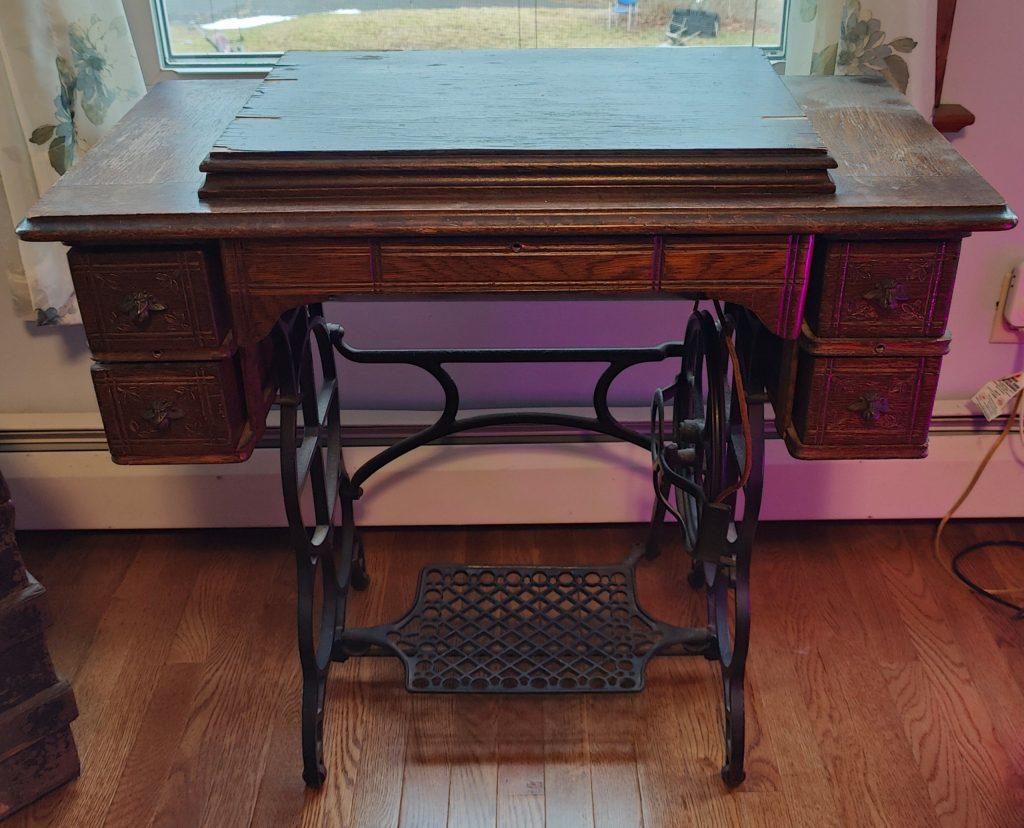
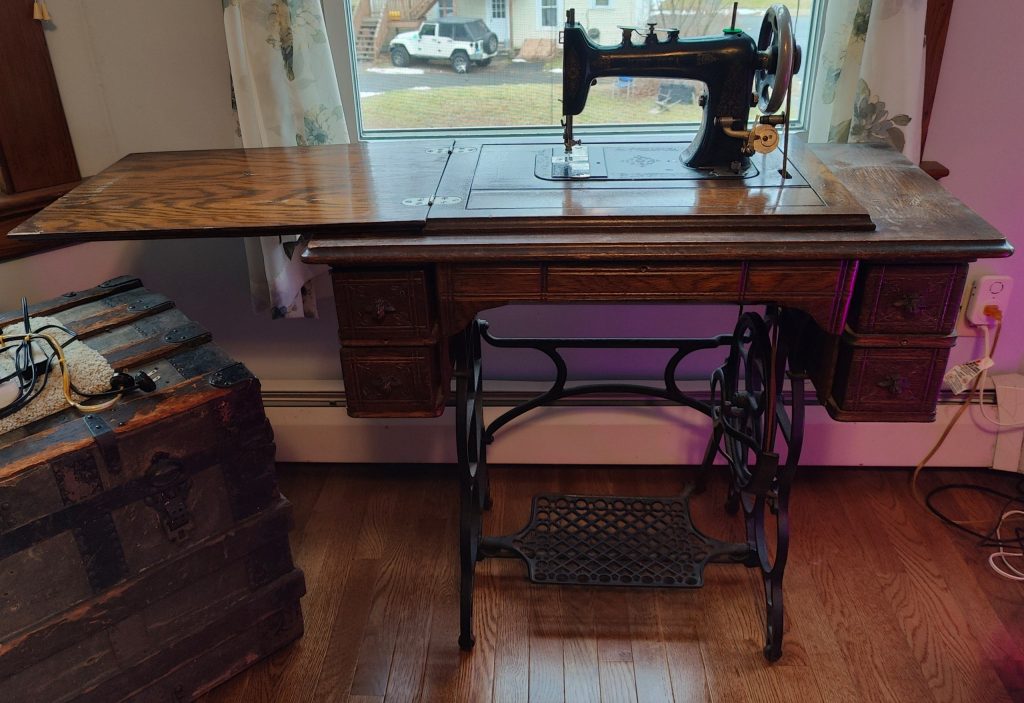
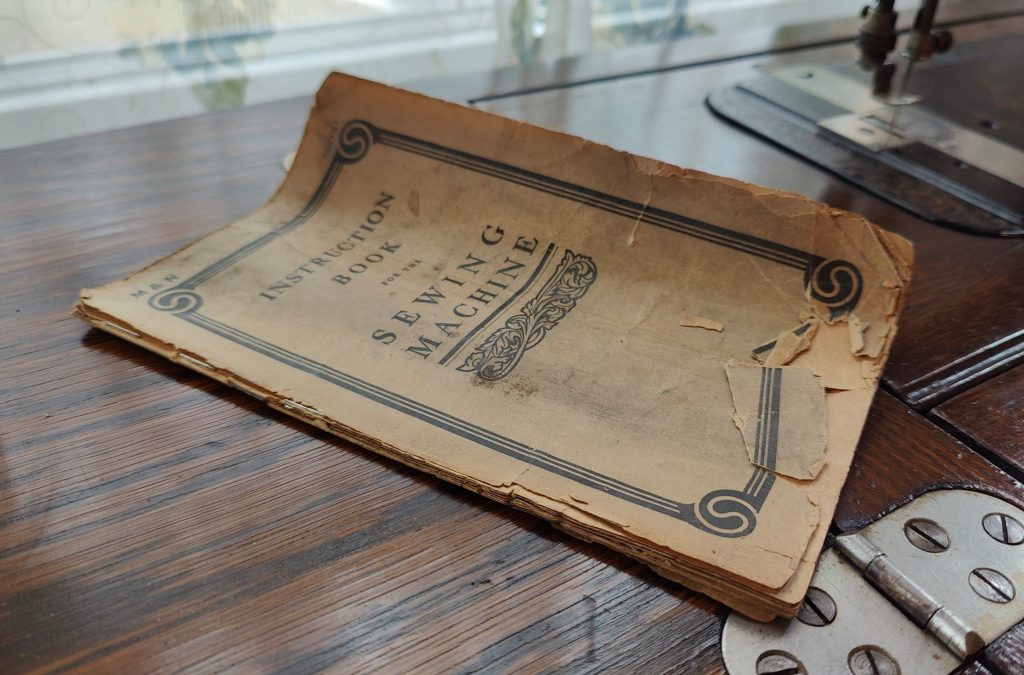
Amazingly, the instruction manual was in one of the drawers, which helped me to thread the machine and get it working! It turned out to be perfectly functional after all!
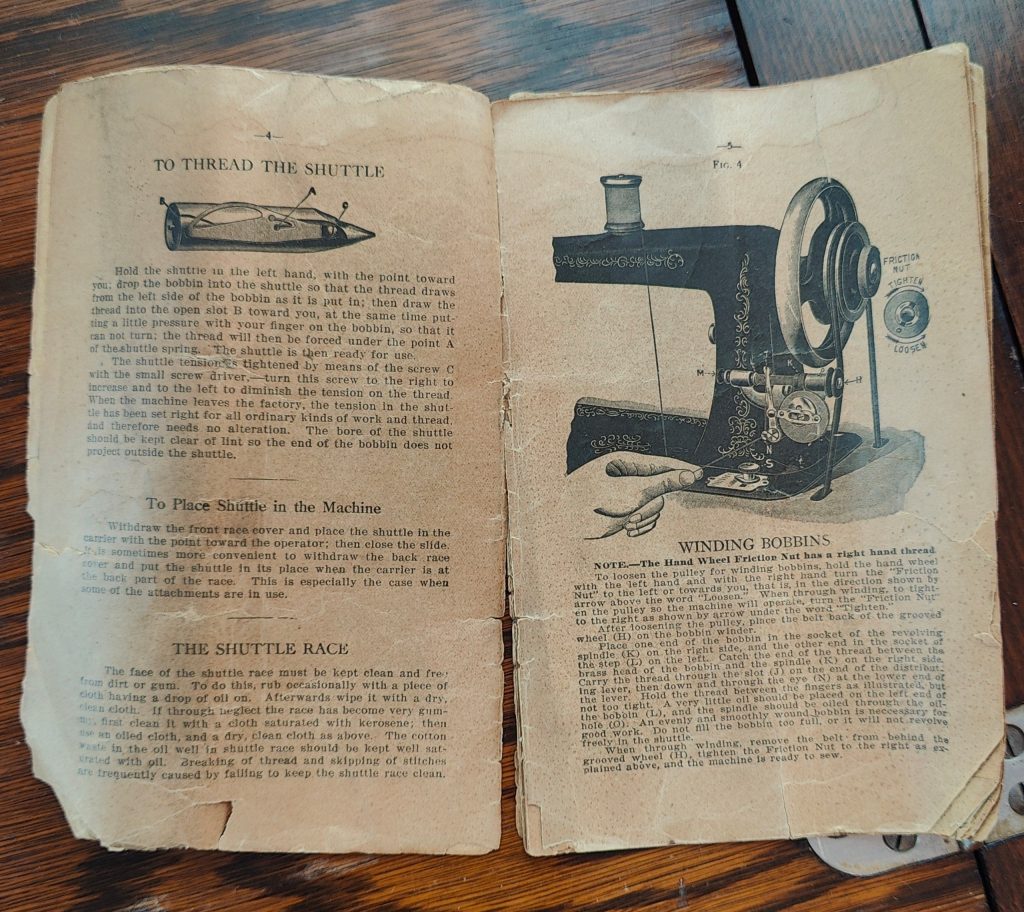
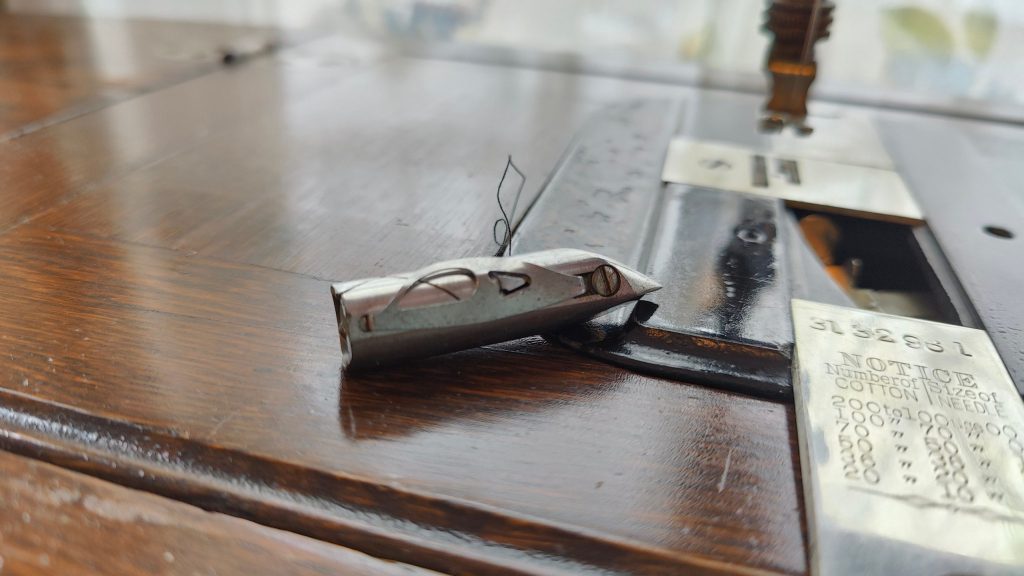
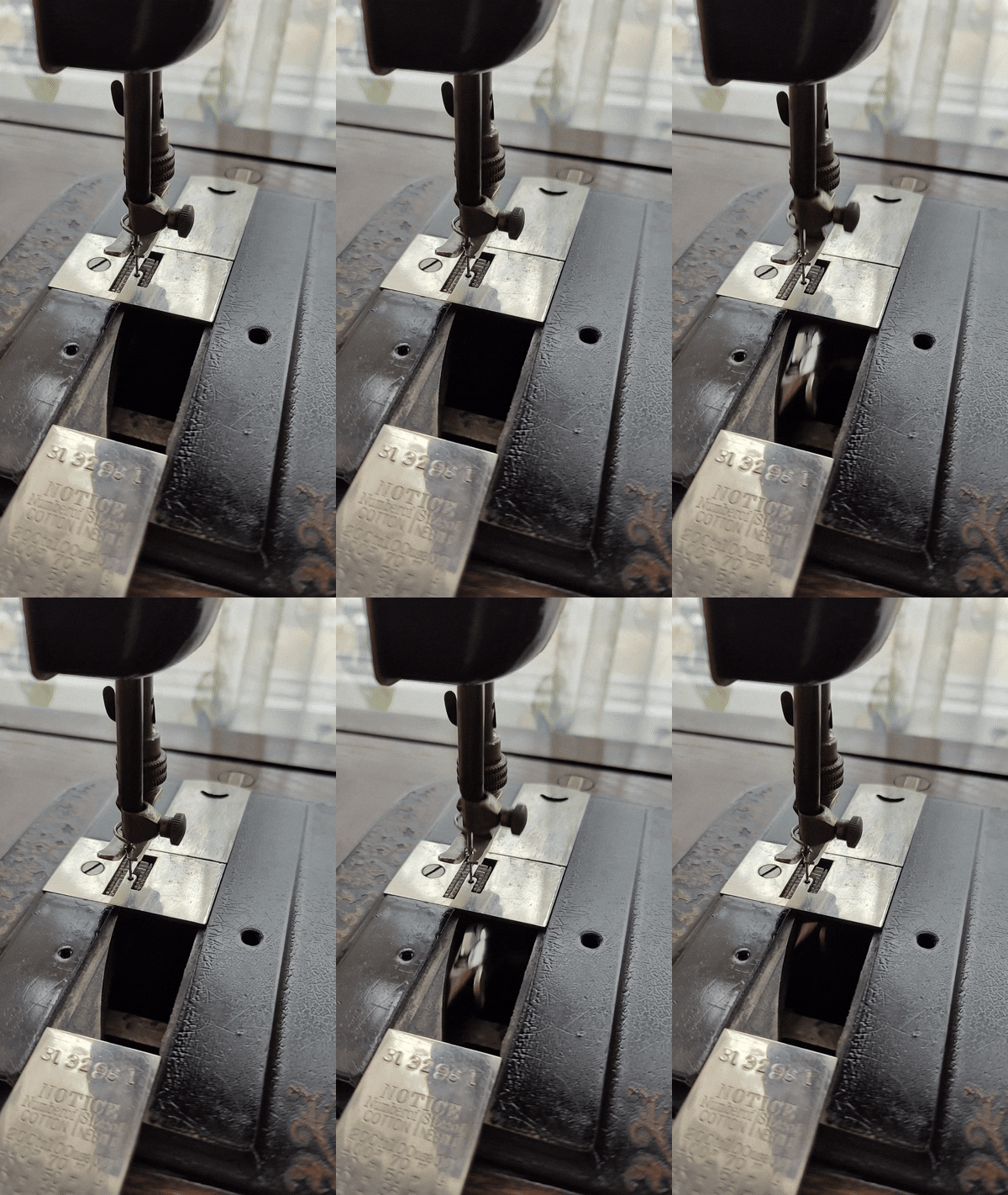
The engineering on this particular machine really amazed me. It must have been an early model, because it still had a shuttle bobbin. If you don’t know what this is, before bobbins simply rotated beneath the machine, their cases actually swung back and forth and were shaped almost like a bullet. See?
And here it is with the slot open so you can see it swinging back and forth (as opposed to the rotating modern ones):
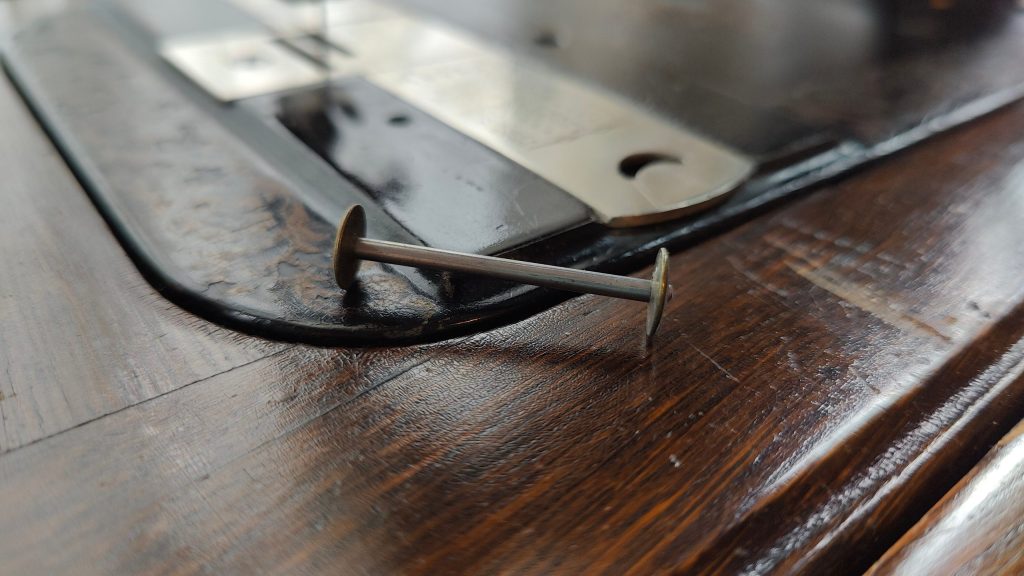
This means the bobbins themselves were also completely different shape:
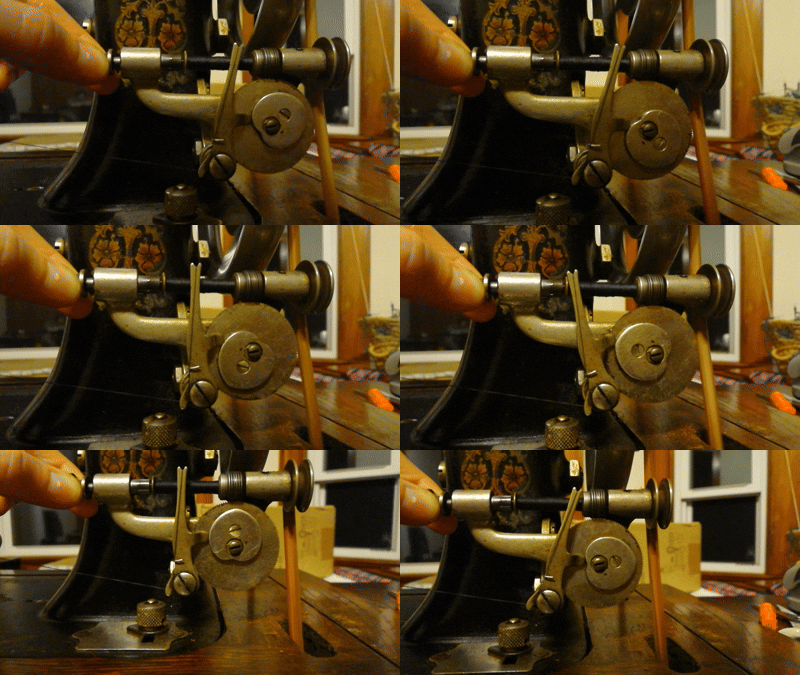
And, further, this meant the machines had a different mechanism to actually thread the bobbins. It’s incredibly complex!
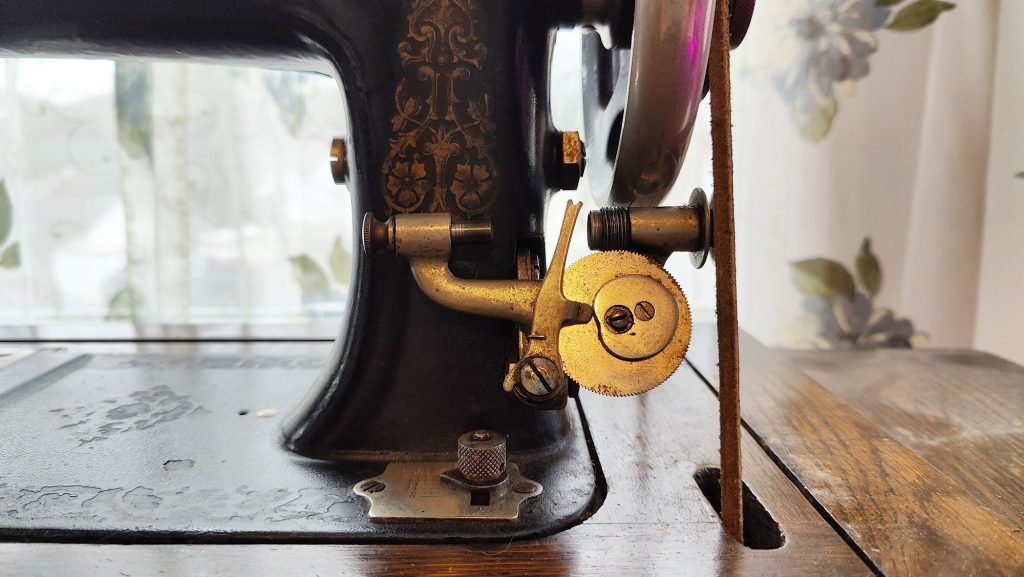
The arm actually slowly feeds the thread back and forth across the bobbin as it spins, and a cardioid-shaped gear controls this arm’s movement back and forth. When I saw the cardioid, my math-brain freaked out! The minds that figured these things out astound me.
And of course, the coolest thing about this machine is that it runs without electricity! Treadle machines are foot-powered, so I got to learn how to actually do that motion while sewing. The old-fashioned girl in me was so thrilled to have the opportunity!
And this was after I’d already seen one of those Victorian girls on YouTube, Bernadette Banner, post a video of her newly acquired treadle machine, so I was all the more excited to be able to use one!
Although I only use my treadle occasionally, I’d never get rid of it! In case we ever don’t have electricity, this machine will always be able to sew (as long as my legs still work)!
And I absolutely treasure it as the beautiful antique that it is! ♥
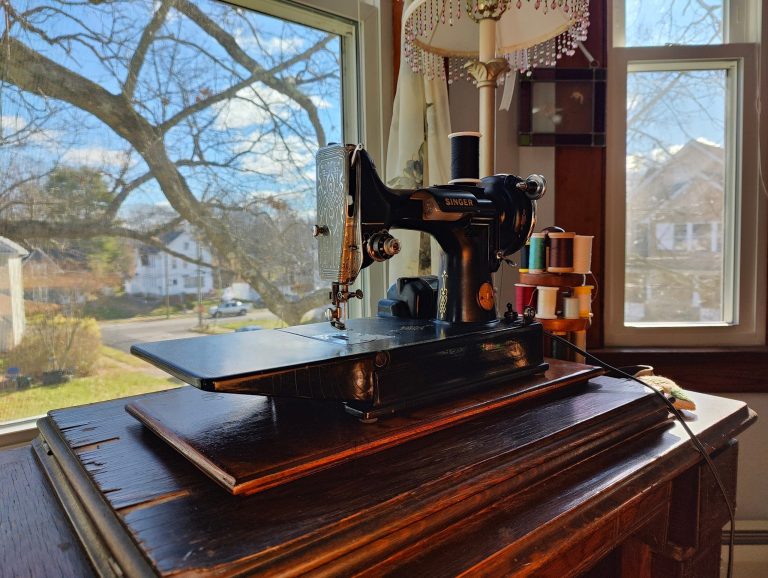
#2: My Singer Featherweight machine
I actually already have a whole post devoted to this gorgeous and sought-after vintage sewing machine, which initially belonged to my great-grandmother.
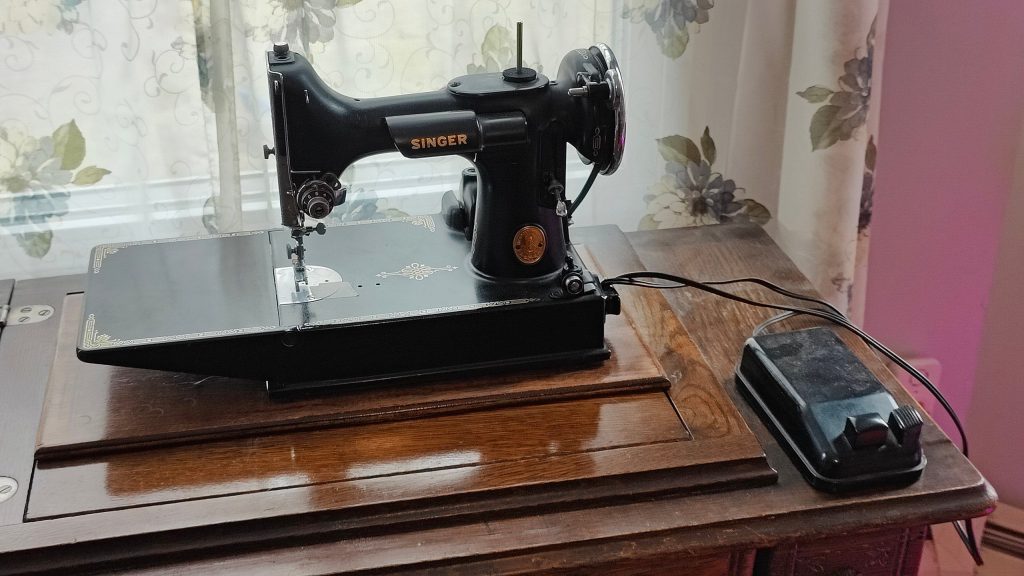
I can easily say this machine is my favorite of all the ones I own! It was also my first machine. My mom had retrieved it from my grandma’s attic and lent it to me when I gained an interest in sewing maybe 5-6 years ago.
I had no idea what an awesome machine it was! People pay good money for these on eBay and the like. They’re super portable (hence the name), compact, and sew beautifully. Plus, there are so many attachments you can find which make it capable of so much more than the simple straight stitch that it does so well!
If you follow along any of my sewing tutorials (such as this one), you’ll see me mainly using this machine. It runs like a dream and the stitches are just so perfect!
Plus, how cool is it that its an actual family heirloom which was passed down to me?
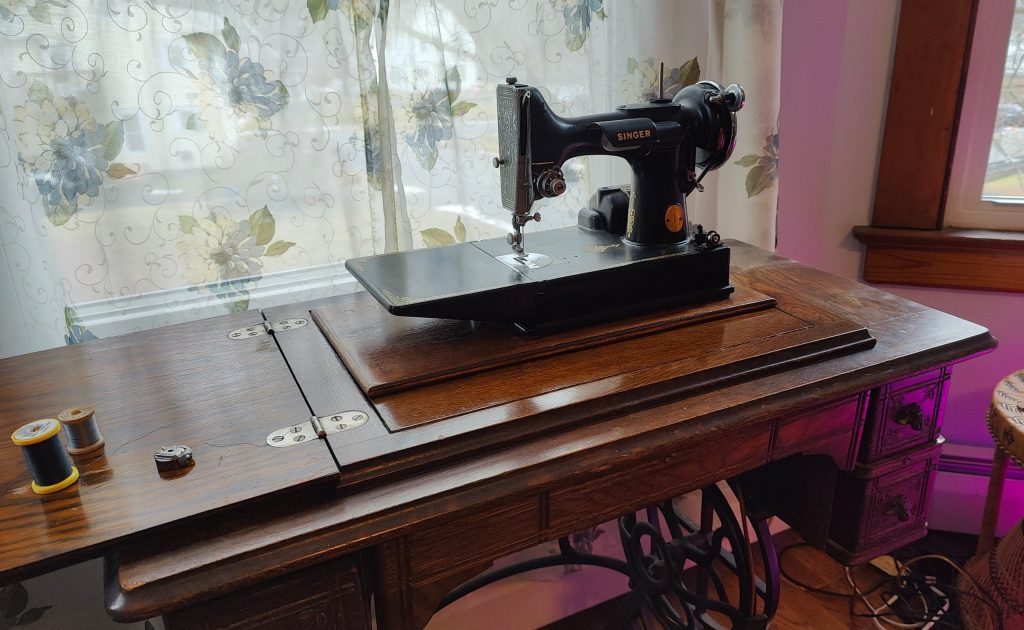
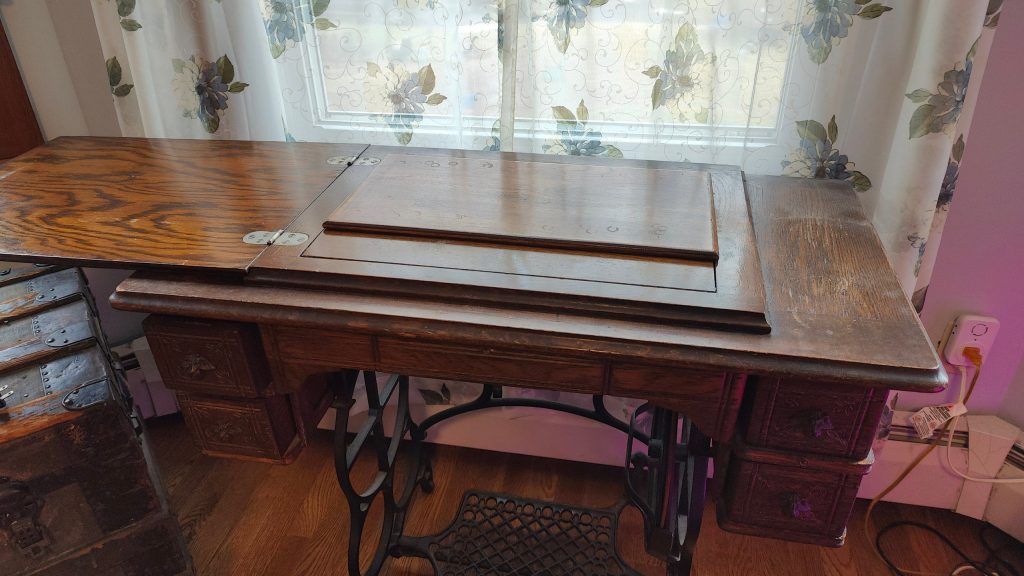
You might notice, from the pictures, that it’s sitting atop the treadle machine cabinet. Indeed, I keep my Featherweight atop the cabinet normally, but I also created a wooden insert so that I can use it on the cabinet with the top open for more table space. See?
An added bonus of the Featherweight is that parts and accessories are readily available online, unlike for other vintage sewing machines, so I know I’ll have an easy time replacing bulbs and the like.
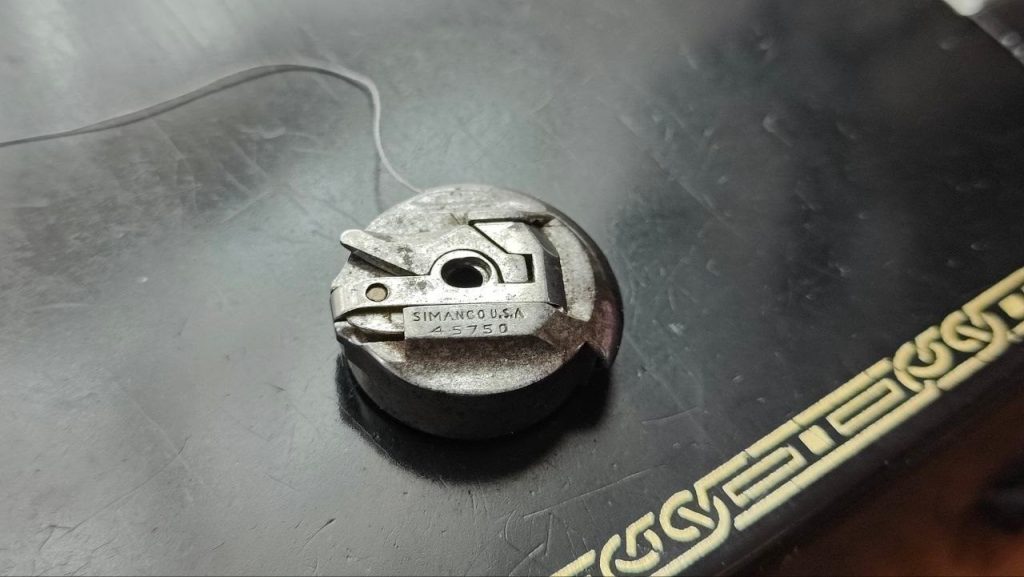
I feel so lucky to have my little Singer Featherweight!
#3: My vintage Japanese-made machine
After my beloved Featherweight, the machine I’m next most likely to use is this vintage Japanese tank of a machine!
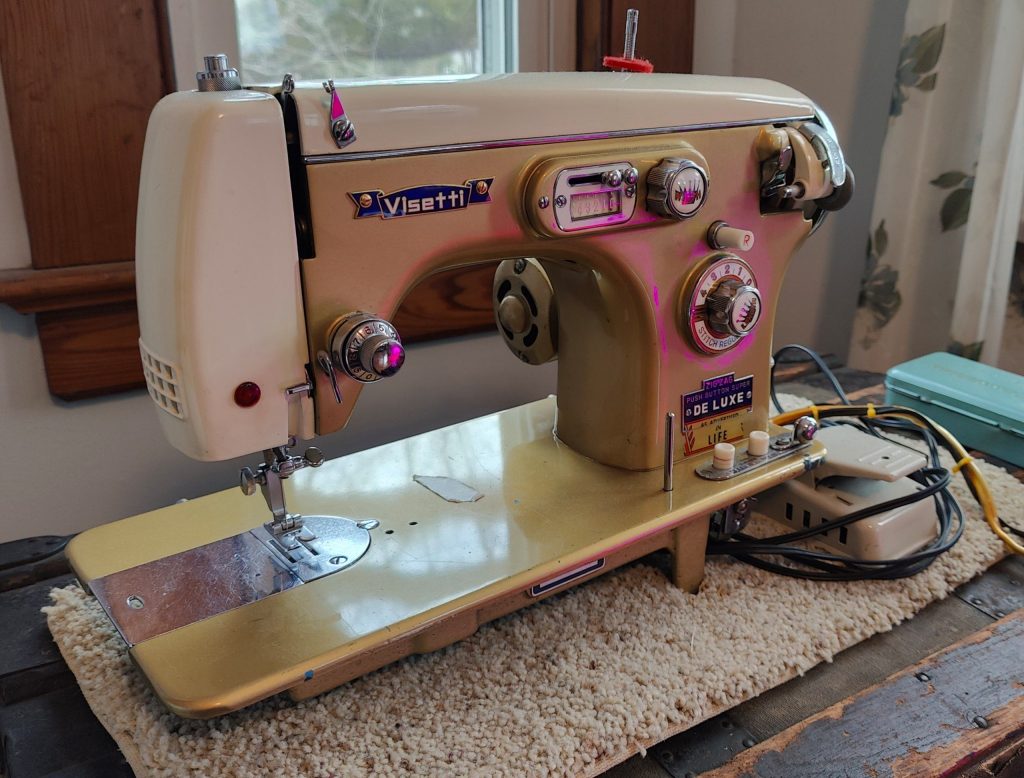
And let me tell you, after becoming accustomed to the light-weight aluminum body of my Featherweight, the weight of this thing is hard to get used to! (I plan to build a cabinet for it so I don’t need to lug it over to the table every time I want to sew with it…)
I acquired this machine from an incredibly lovely woman. She recently passed away after a battle with cancer and, a few weeks before she passed, she offered the machine to me because I knew someone who might want it. I already had my three other machines, so what would I possibly need this one for?
Well, once I’d taken it home, I fell in love with it!
It had belonged to this woman’s mother, and it was impeccably cared for and in near perfect condition. Not to mention, it had all metal parts and a much more powerful motor than my Featherweight. And it could do a zigzag stitch!
So, I just couldn’t part with it, honestly.
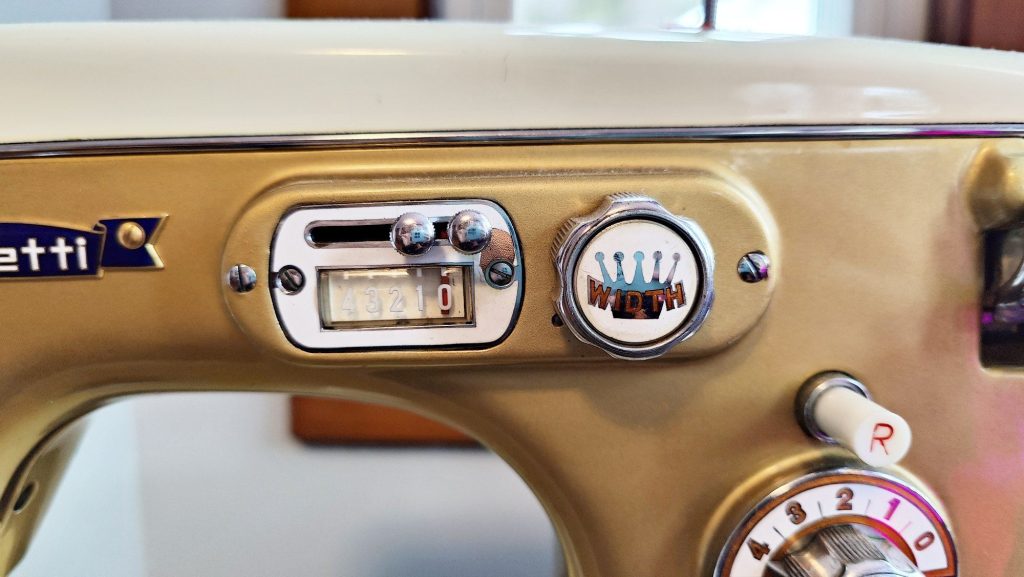
The history behind these types of machines is that, while Singers were historically made in the U.S., copycat machines started to be manufactured in Japan. But they weren’t manufactured under a clear company name. Even though this machine says “Visetti” on it, that’s just a tag that was added when it reached the states and was individually sold. In reality, a bunch of these machines were shipped over, made in the same place, and given a bunch of different names depending on who was selling them.
So it can be hard to know what you’re getting when you’re searching for one of these beauties. Some of them have a single plastic gear which controls the zigzag function, and this gear unfortunately tends to have cracked with age. I’ve seen two machines very similar to this one here that had this cracked gear, but my machine has a nice metal one. (This was on my hunt for a vintage sewing machine for my niece this past Christmas… what a headache!)
So, I guess quality was starting to become hit-or-miss around the time these machines were manufactured. I just happened to get lucky!
So, while I don’t enjoy sewing with this machine quite as much as my Featherweight, it’s my go-to when I need a basic zigzag stitch or if I’m doing something that really taxes the motor, such as multiple rows shirring. My Featherweight unfortunately overheats when I run it too fast and too long.
#4: My most modern vintage machine: A *plastic* Kenmore!!!
Oh my goodness guys… I’m so sorry! For everything I say about my hatred of plastic, I do indeed own a plastic sewing machine!
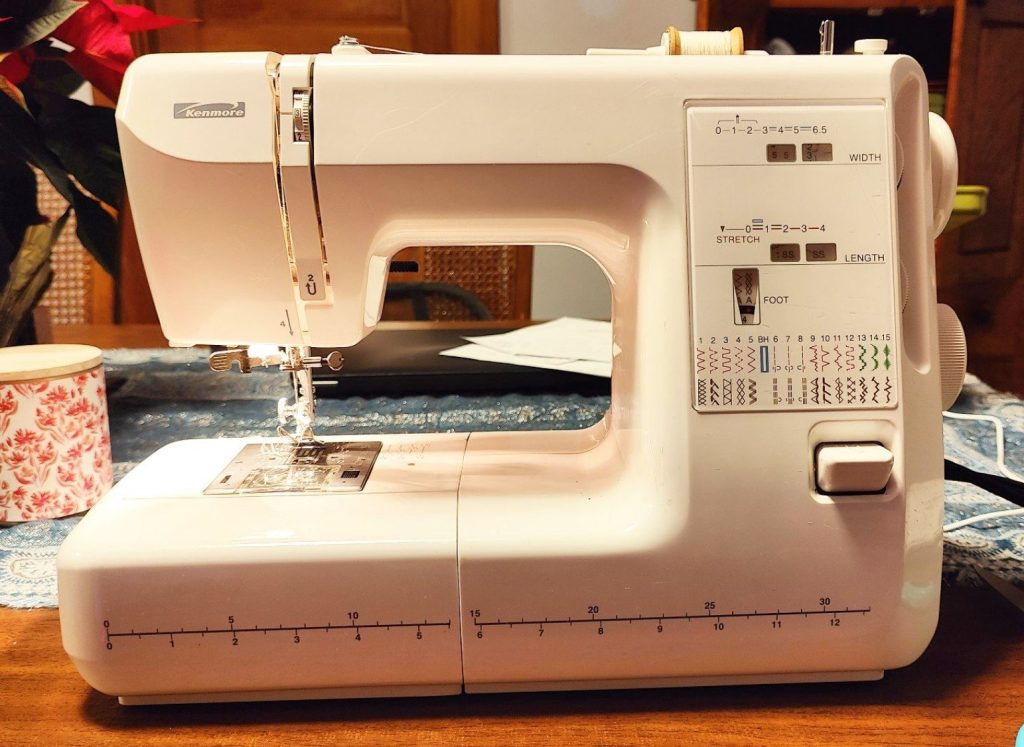
If you’re feeling betrayed at this point, know this one was given to me by the same lady who gave me the Japanese machine.
And I appreciated the gift, because it does all kinds of specialty stitches that, though they only seldom come in handy, are quite useful to have around!
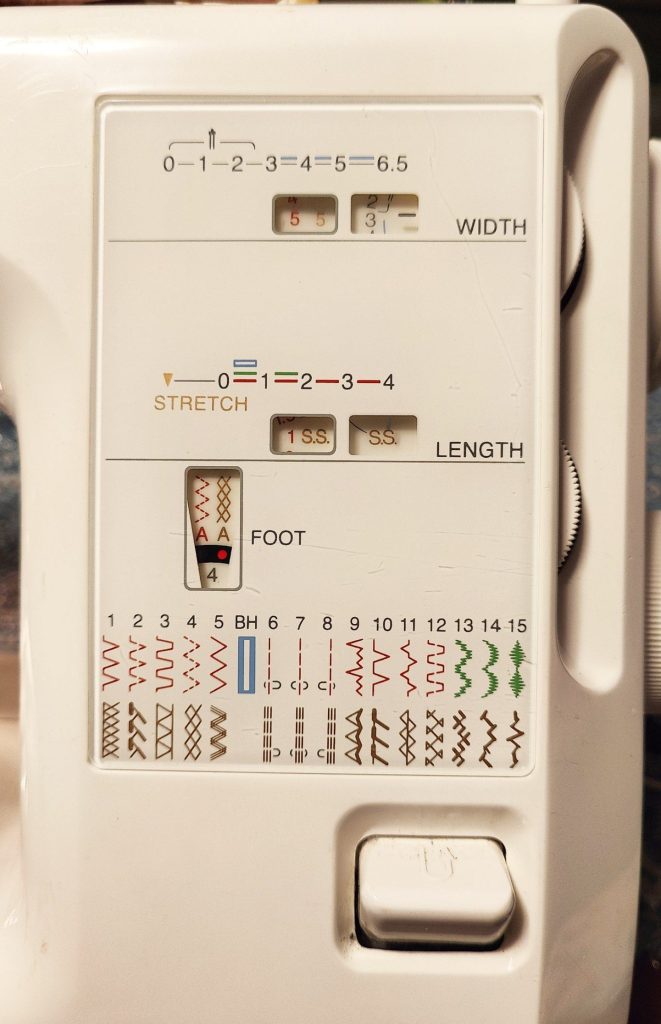
This includes stretch stitches for sewing knits and darning holes in knits, which proved so useful when I was repairing my merino wool thermal leggings.
This is also my only machine that has a removable bed for hemming narrow circular areas, such as sleeves.
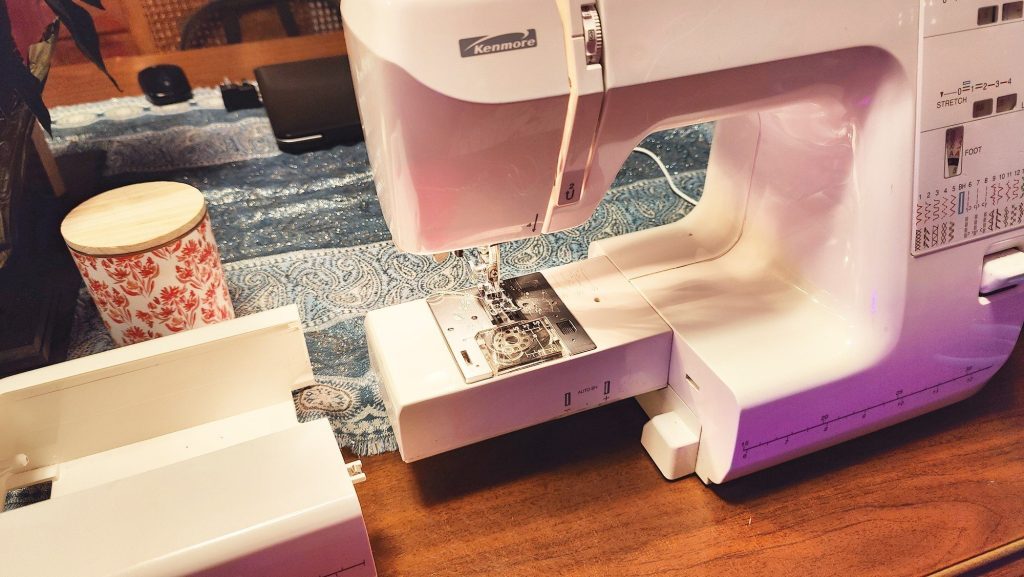
Though I don’t have a lot of faith in the actual construction of the machine, since I’m giving it only light use, I expect it to last a long time and be there whenever I need a special stitch my other vintage machines can’t do!
It even does fancy overlock-type stitches which come in handy when I need to finish a seam in a similar way to a serger.
This machine was manufactured sometime during the 90s, so I still consider it vintage, but it’s definitely much more modern than my others.
Some final thoughts…
What do you guys think? Between this four machines, do I have my bases covered? Which one was your favorite?
I’d love to hear if any of you have a vintage sewing machine and what you like about it. I find the old vintage models were just made so well, as if they would run forever! If only stuff were made so well nowadays, huh?
And having these older machines really satisfies the part of me which yearns for an older and simpler time, before our current insane amount of technology surfaced!
These machines were indeed the product of the technological age as it bloomed, from the start of the industrial revolution (when the antique treadle was made) to when manufacturing started to shift from the U.S. to overseas in Japan.
Eventually, profits (and not quality) became the concern, and plastic was the mechanism through which products could be made cheaply and at a higher profit-margin. But there was a time before this became the norm, and the machines are still out there! I would really push anyone who wants to get a machine to consider a vintage machine!
They are on Craigslist, eBay, and Facebook Marketplace. The advantage with Craigslist is you can usually go in-person to check a machine out and make sure it doesn’t have any plastic parts.
Anyway, I hope you guys enjoyed my post about my sewing machine collection! I absolutely adore it. Happy sewing and I wish you all luck with fantastic vintage finds!