Why do violinists wiggle their fingers? A comprehensive overview of vibrato
If you’ve ever seen a violinist play, you might have wondered, why do violinists wiggle their fingers? I have definitely been asked this question loads of times! Or, sometimes my students will ask, “How do you do that shaky thing?” Then, they proceed to shake their bow hand really fast and try to do it, which always makes me laugh!
Finger wiggling on the violin, also known as vibrato, is a technique violinists use to make their playing more beautiful. They do this by altering the pitch of the note they are playing up and down very quickly. In this post, we’re going to go over what vibrato is, how a violinist actually does vibrato, and how difficult it is to learn.
What exactly is vibrato?
Vibrato is a technique which many different musicians employ to decorate their playing. However, even though many instruments (and voices) can do it, on a fundamental level, it is the same musical phenomenon in each case!
Indeed, vibrato adds a beautiful character to a violinist’s playing. Just listen to the following passage from Tchiakovsky’s Violin Concerto, first without vibrato, then with it.
The vibrato really adds a lot, doesn’t it? But what exactly am I doing to achieve that pretty sound?
Vibrato is simply the process of quickly changing the pitch of a note up and down around the given pitch which is being played. Some musicians will go only below the given note, and some go above and below, but you get the point.
The easiest way to understand this is to hear vibrato SUPER slowed down. Here is a video of me executing vibrato on a note, followed by the slow-motion version.
I know, it sounds super gross when it’s slow, but can you hear the pitch going obnoxiously up and down? Well, funny enough, when this is done very quickly it is actually extremely pleasing to the ear!
How is vibrato done on the violin?
We now know that vibrato is a technique which many different instruments use, but how exactly is it achieved while playing the violin?
To understand this, we have to remember that vibrato is when the pitch of a note is changed quickly up and down. For the violinist, this means it is up to the fingers of the left hand to make the sound, since our fingers are what produce the different pitches.
When you put a finger on a given string, it produces a note which is different from the string without any fingers on it. (A string without any fingers on it is also called an “open string”. It is impossible to do vibrato on an open string!) This means it is up to the finger to alter the pitch back and forth. You might thus imagine a violinist sliding his or her finger really fast back and forth to do vibrato but, unfortunately, this is not effective.
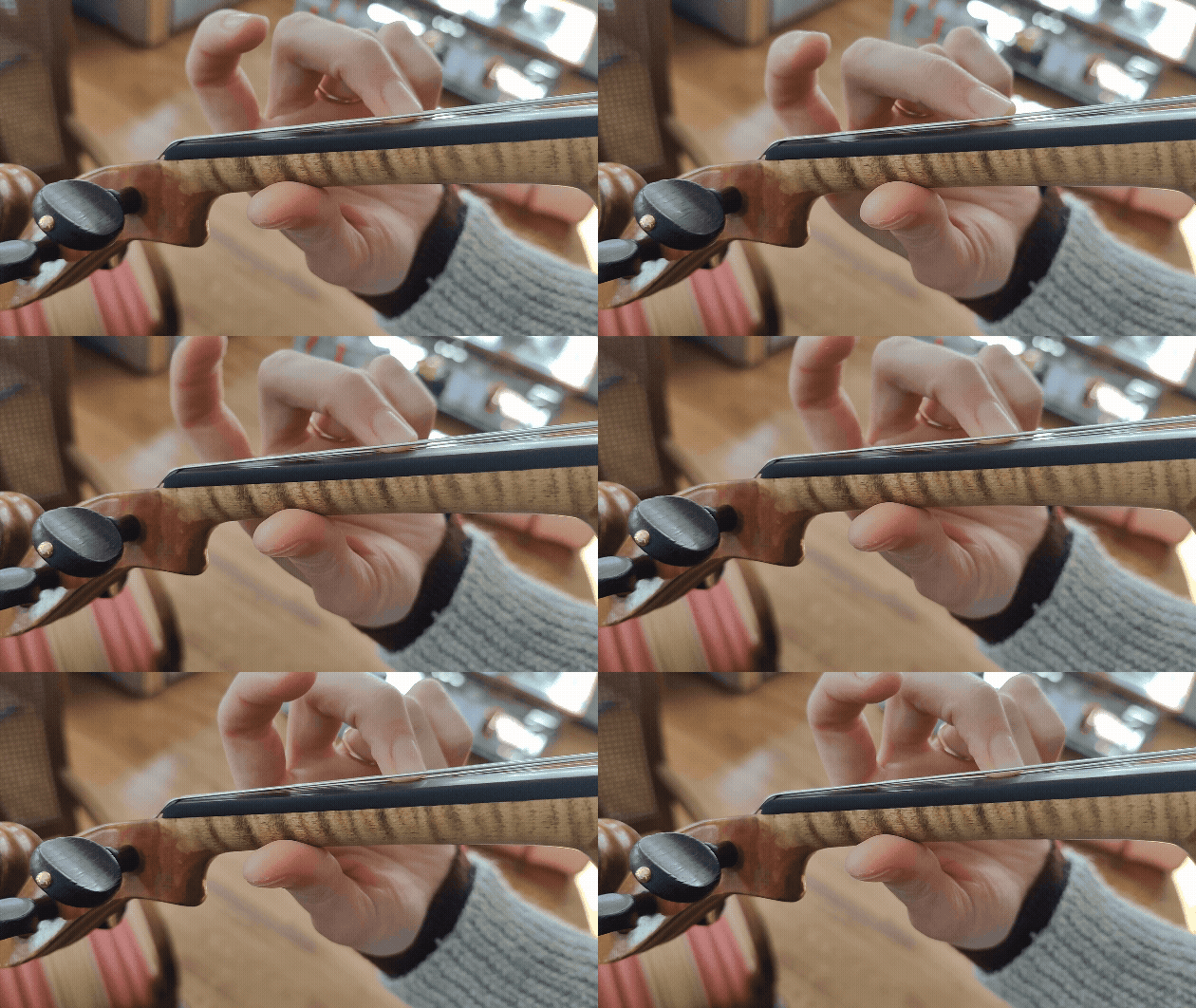
Instead, the violinist learns to move his or her hand or arm in such a way that the finger in use rolls forward and backward without sliding. It’s sort of like pushing a ball back and forth on the ground. The ball isn’t sliding, it’s rolling. See?
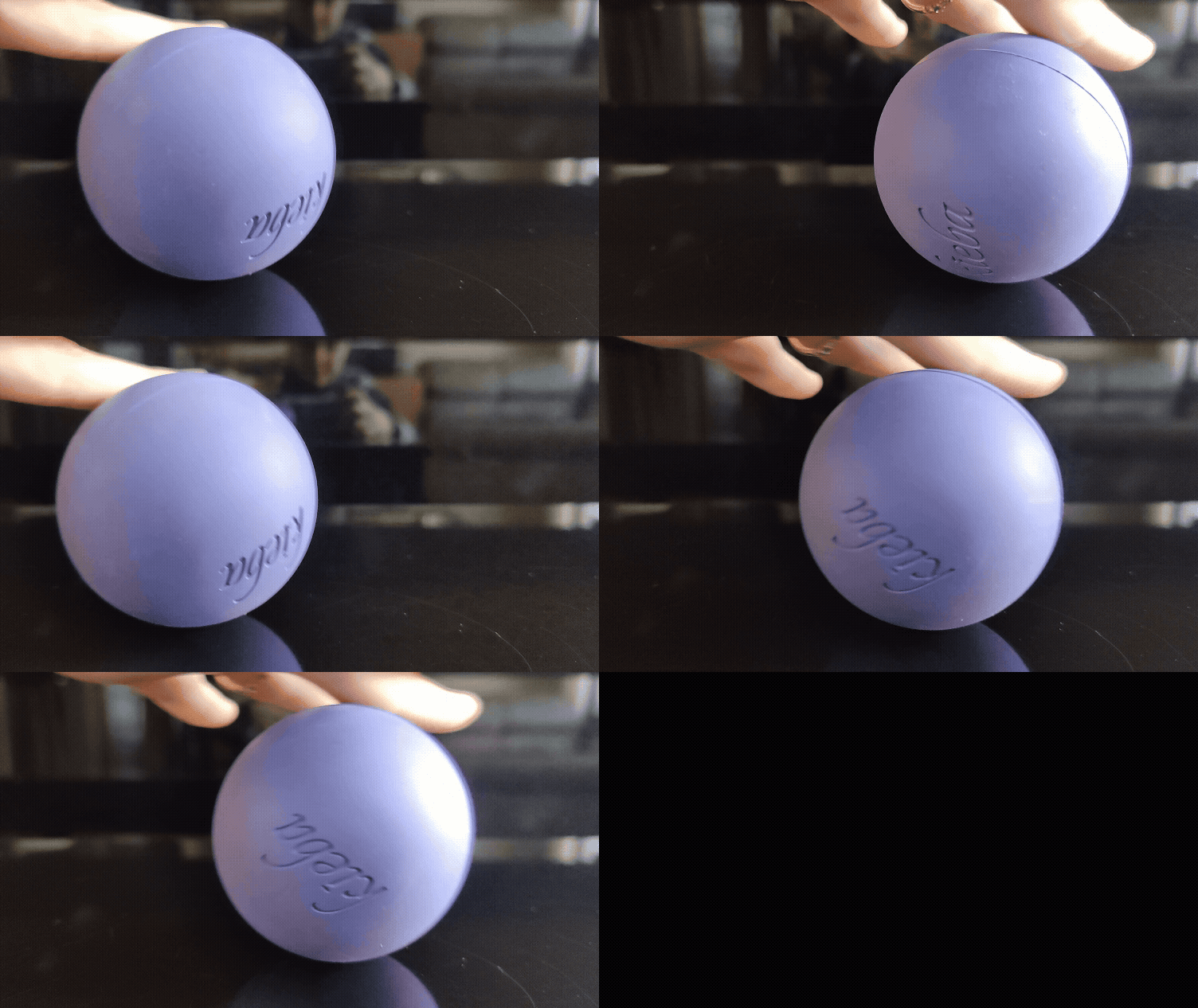
And that is what our fingertips are doing when you see us wiggle our hands! The rolling of our fingertips back and forth causes the pitch to go up and down and, for violinists who are well-trained, this produces a beautiful sounding vibrato.
How difficult is it to learn vibrato on the violin?
Now, though I might have given a simple explanation for what’s happening during a violinist’s vibrato, it doesn’t mean it’s actually that easy to learn! Indeed, there is a lot more behind the technique than I have so far described.
Two different types of vibrato
While rolling the finger back and forth might sound easy enough, this motion is actually driven by either the hand or forearm, depending on which type of vibrato is employed. Here is a rundown of the two different types of violin vibrato.
Arm vibrato: The entire forearm, including the hand, moves as a unit from the elbow joint, enabling a given finger to roll forward and back parallel to the string.
“Wrist” vibrato: Though more aptly termed “hand” vibrato, the entire hand moves as a unit from the wrist joint, enabling a given finger to roll forward and back parallel to the string.
Notice, in both types, the finger rolls forward and back; the only difference between the two is the mechanism driving this action (forearm movement vs. hand movement).
What makes violin vibrato difficult to learn
Unlike cello vibrato, which utilizes a much simpler motion, violin vibrato is especially hard to learn. Admittedly, arm vibrato specifically is somewhat easy to learn, but it is less useful and less commonly used than wrist vibrato. Thus, I always start my students with wrist vibrato because I don’t want them to learn arm vibrato and resultingly have no motivation to learn the other method.
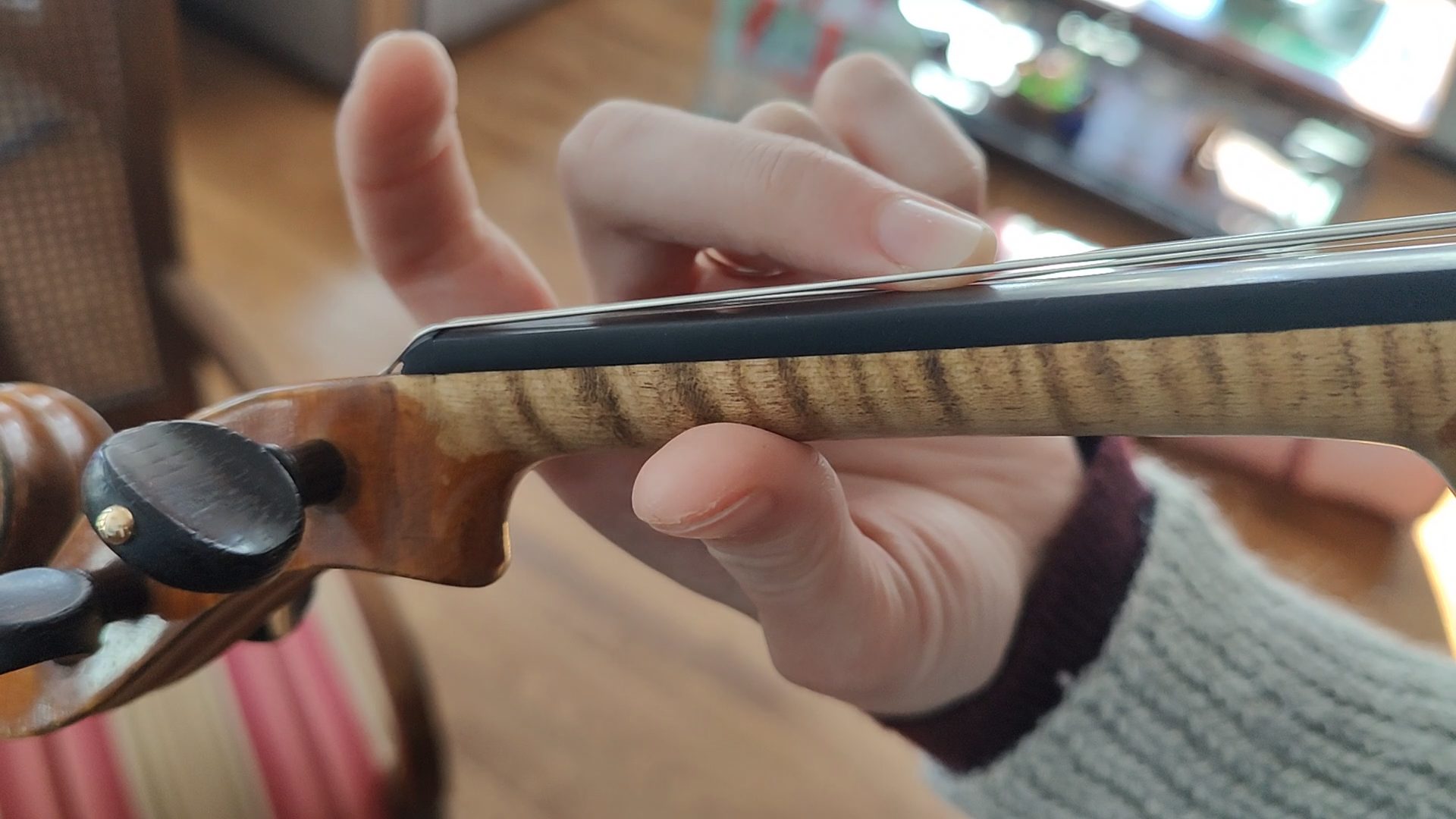
Generally, though, what makes violin vibrato difficult is the angle of approach our hand and forearm take to the neck of the violin. While cellists’ arms, for example, approach the neck of their instrument perpendicularly, a violinist’s arm approaches the neck at more of an angle, somewhere around 45 degrees. See what I mean in this picture?
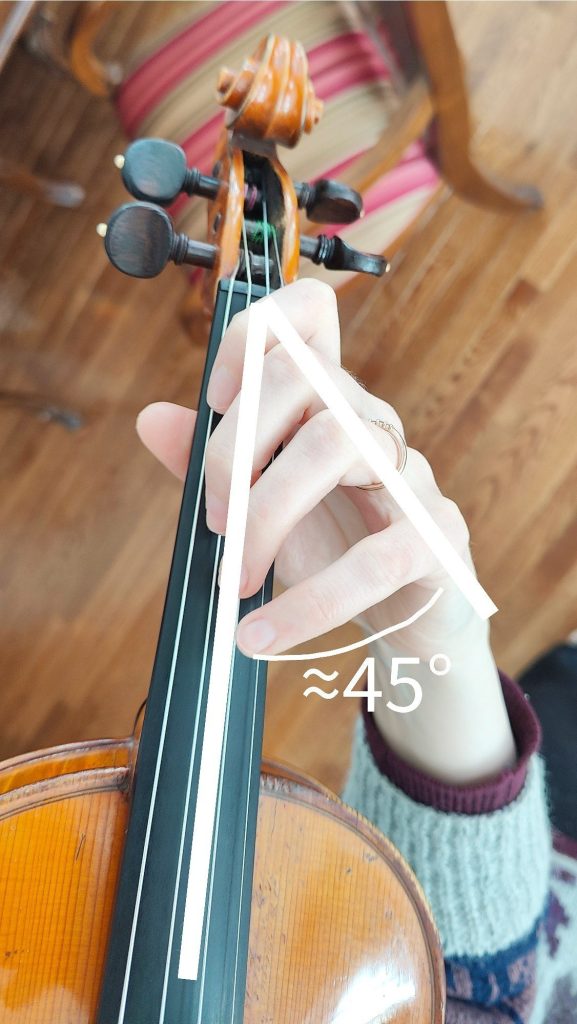
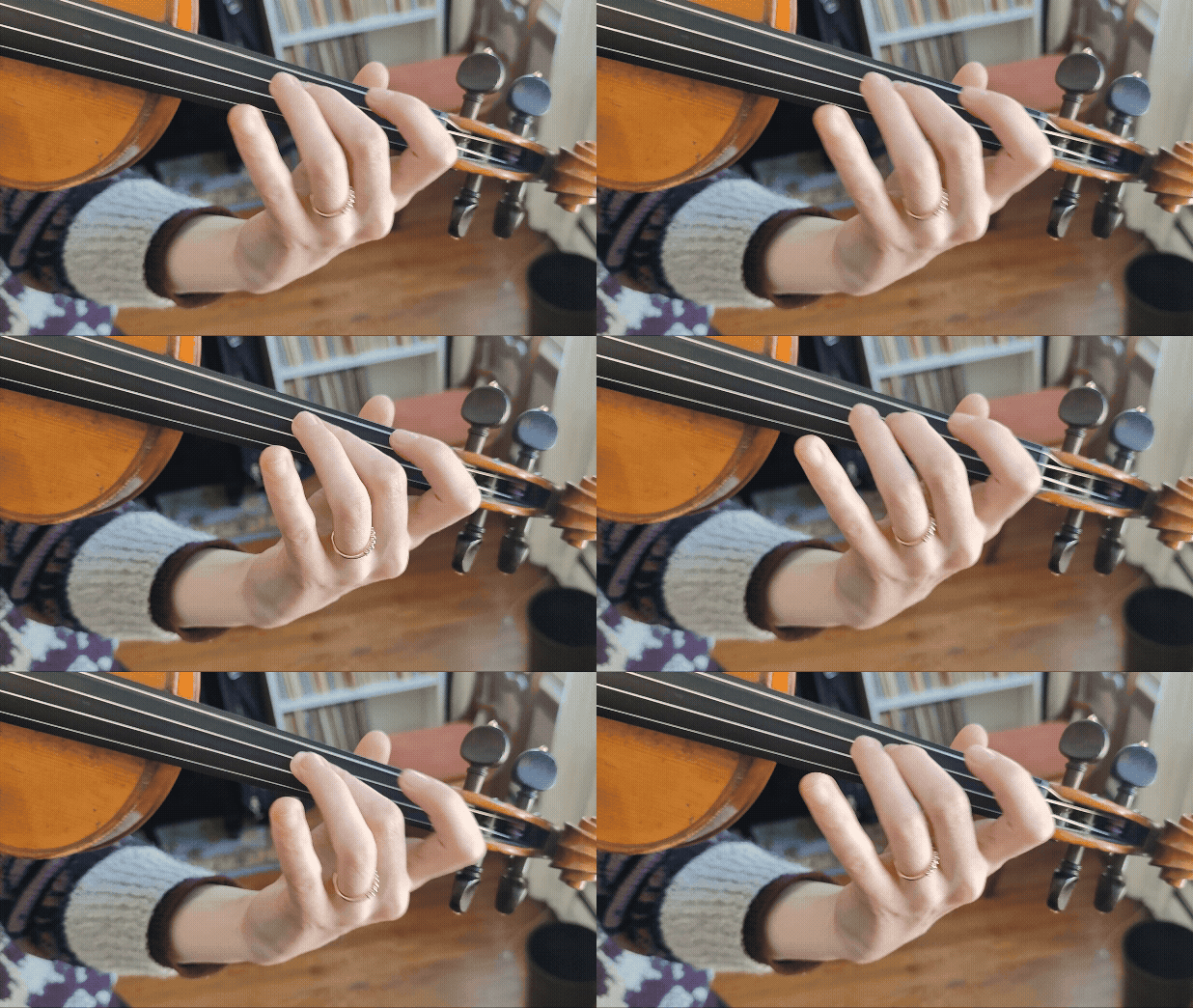
This necessitates the learning of a motion which is basically never used in everyday life and which feels very foreign to the learner. In the case of wrist vibrato, it’s a sort of flapping of the hand, as if you’re fanning yourself, but at the skewed angle I mentioned earlier. So, although the hand approaches the neck at a 45 degree angle, the motion of vibrato must be parallel to the neck. Weird, right?
My experience teaching vibrato
This is why I actually really struggled to teach vibrato as a new instructor. “How do you do vibrato?” an intermediate student would ask. I would try to explain it on the spot, but a truer answer would have been, “I have no idea how I do it!” It’s so funny that just because I could do vibrato myself, it didn’t necessarily mean I knew what I was actually doing!
It took me several years of thinking, watching instruction videos (this one by Ray Chen still stands out in my memory), and trying out my methods on students to get confident teaching vibrato. And even then, it’s still not easy to get across to my students! Generally, it takes at least several months for a student to learn a fully developed and proper vibrato, which is a testament to its difficulty!
For these reasons, I usually wait until a student has a few years of experience before I will teach him/her vibrato. Unfortunately, it just tends to be one of those techniques you learn only when you’ve become more advanced on the violin, though of course there are exceptions.
Wrapping it all up…
I hope you now understand (at least a little bit) why we violinists wiggle our fingers! And you’ve also found out it is not exactly easy to learn to do! Violin, in general, is a difficult instrument (click here to find out why…) so this isn’t surprising in the least!
If you’d like to learn more about the violin, you can check out my posts on the topic here.
Thanks so much for being here, and please feel free to comment or ask questions down below!