My keto electrolyte powder recipe: Super simple, cost-effective, and includes trace minerals!
Disclosure: I am an Amazon affiliate and this post contains affiliate links, which means I may earn a commission (at no extra cost to you) if you purchase products mentioned.
Lately, I’ve been following a clean keto diet for health reasons, and I quickly found out that I badly require electrolytes while on this diet! Of course, as the penny-pincher and DIY enthusiast that I am, I decided to figure out how to make my own keto electrolyte powder recipe!
A lot of keto influencers online will recommend a brand called LMNT for electrolyte powders. And I’m actually super happy this brand is out there, because there will always be people who would prefer to pay the extra cash for a product rather than make it on their own.
However, if you do the math, this stuff is crazy expensive for those of us who want to have a daily supply of electrolytes!
So I did my own research and came up with my own keto electrolyte recipe that has worked so well for me! I’m super excited to tell you guys about it. It’s extremely simple and cost-effective, though it does require some expense upfront.
Let’s dive in!!
Why are electrolytes often needed on a keto diet?
If you are reading this post, chances are you’re either currently on a keto diet or considering trying one. I’ve been through a load of diets on my autoimmune healing journey, and recently I’ve found myself favoring a keto diet due to its restriction of carbs and purported healing effects. So far, I have experienced a lot of improvements, so I’m sticking with it!
(As a side note, I’ve recently learned so much about the healing benefits of the keto diet from Dr. Axe’s book, Keto Diet, which I would highly recommend if you’re at all interested in trying a healthy version of keto!)
However, one challenge I experienced when starting keto was feeling very thirsty. I’m not sure quite why this is, but carbohydrates definitely seem to make it easier to stay hydrated. As soon as I cut them out, I’m thirstier! If you know more about why this is, I’d love to hear in the comments below!
Further, this increased difficulty in staying hydrated while on the diet is well-known in keto communities, hence the emphasis on electrolyte powders like LMNT.
The electrolytes themselves are dissolved minerals which circulate throughout our bodies and aid in many functions. Specifically, they play a role in hydration, so adding them to your water while on a keto diet can really make a huge difference!
So, if you start keto and find you are thirstier than usual, trying some electrolytes might really be a game-changer! It’s certainly made the diet doable for me.
The 3 basic ingredients you need for an electrolyte mix
If you look at LMNT’s unflavored electrolyte mix, you’ll see the three ingredients basically boil down to sodium, potassium, and magnesium. Specifically, these electrolytes are in the form of salts. And when you think of electrolytes, that’s what should really come to mind: They’re just salts!
And once the salts are dissolved, the sodium, potassium, and magnesium become aqueous and move through our bloodstream as ions.
So my recipe here is going to include salts of the following three minerals. Let’s take a closer look at each of them.
Sodium
The main ingredient in electrolyte mixes is always sodium chloride. Yes, this is just ordinary salt!
But wait a minute… Isn’t salt bad for us? Or shouldn’t we at least watch our intake?
Man, let me tell you, salt has wrongly been under attack for decades. The same people who told us salt is bad for us also recommended margarine in place of butter as well as baby formula instead of breast milk. That’s my short thesis in favor of salt, haha. Anyway, I personally don’t worry about having too much salt. Everyone’s body is different, and I’m certainly not worried about the sodium!
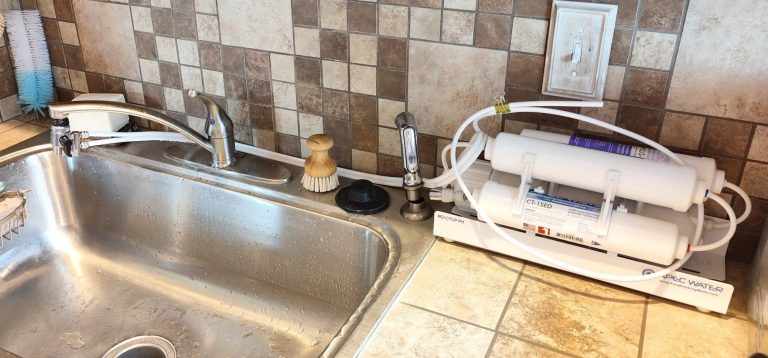
However, not all salts are created equal. For this recipe, I use a sea salt with trace minerals. For me, this is especially important, since I use a reverse-osmosis water filter that pretty much strips everything (including minerals) from my water!
Related: My reverse osmosis water filter: One of the most essential parts of my healthy home!
Further, this brand tests for heavy metals which gives me an added peace of mind.
Here is the salt I use, and I adore it!
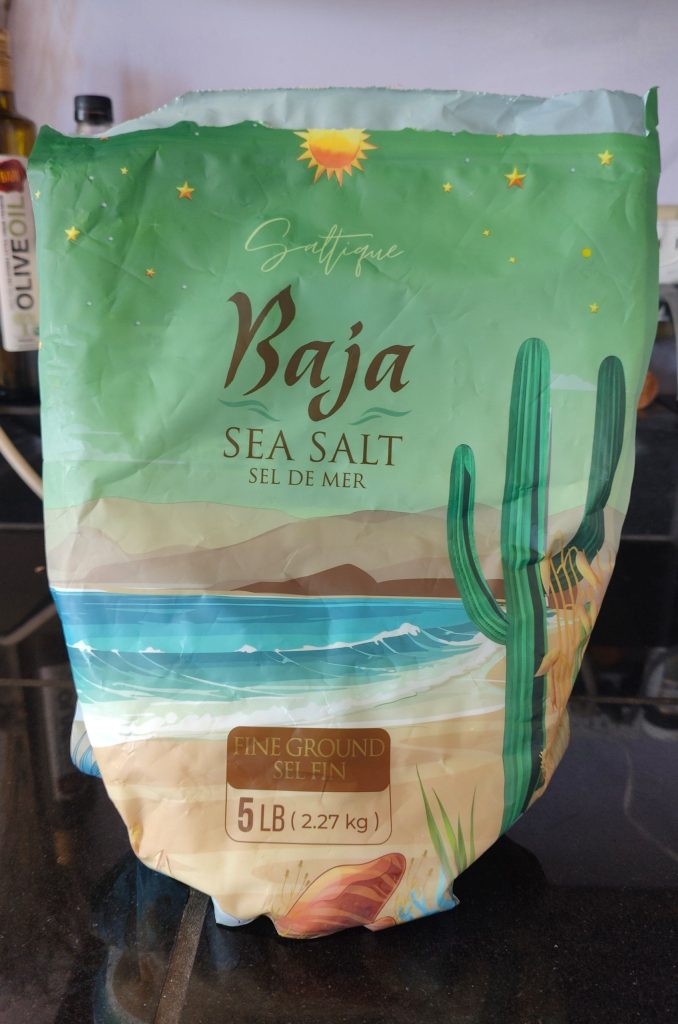
I know, it’s incredibly pricey for salt, but when I thought about how long salt actually lasts in our household, the cost is really quite negligible over time.
Potassium
The next most abundant ingredient in electrolyte mixes is potassium chloride, also a salt. This can often be found in grocery stores as a sodium salt-alternative but, unfortunately, most brands have added anti-caking ingredients and the like.
This is why I was super excited to find a hefty bag of pure potassium chloride on Amazon!
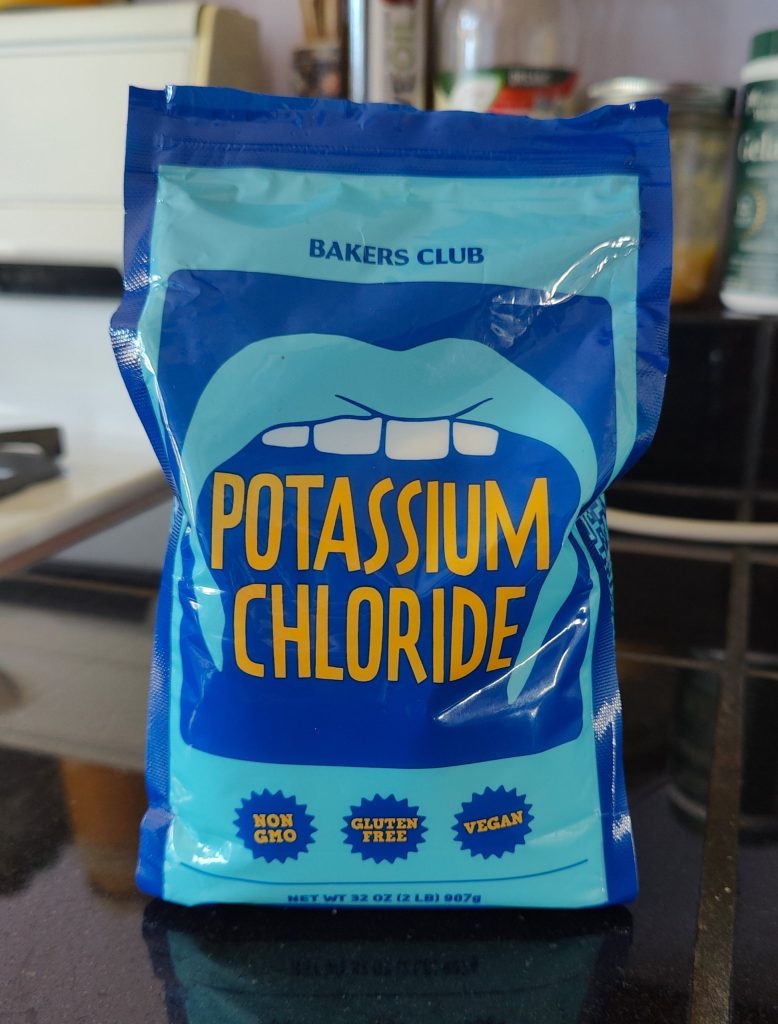
If you’re interested in just grabbing a bit of it to try and don’t want a big bag yet, Nusalt is also pure potassium chloride. It just won’t last you as long. But this is what I got to try it out initially!
Long-term, you’ll definitely get more bang for your buck with the bigger bag of potassium salt. Though, this recipe uses far less potassium than sodium, so both will last longer than you’d expect!
Magnesium
Magnesium is known for helping relieve muscle tension, aid with bowel movements, and support relaxation. It is definitely worth considering taking it as a separate supplement for this reason!
However, in our electrolyte mix, just a tiny bit of magnesium is added. You actually have a lot of options regarding what kind of magnesium you’d like to use. I already have a magnesium supplement around, so I just empty the capsules for my electrolyte mix. Any magnesium supplement should work. Again, the amount needed is so small that this one isn’t really worth buying in bulk.
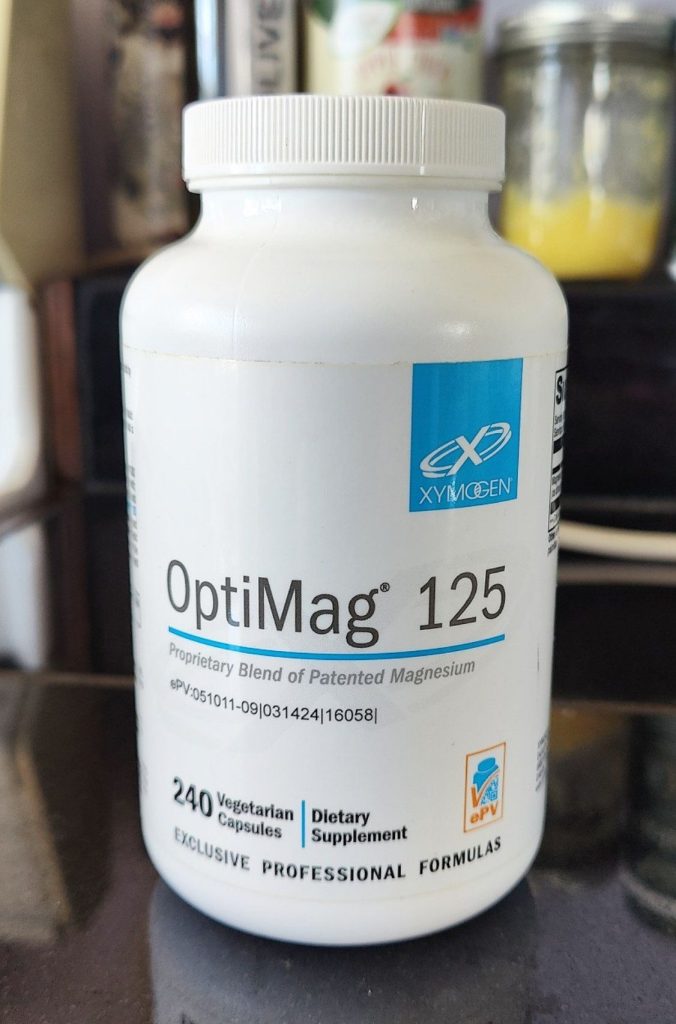
In the picture above is my favorite magnesium supplement. It contains two different types of magnesium, but this isn’t necessary at all for an electrolyte powder! Whatever you do end up getting, just make sure it doesn’t have any unnecessary additives and that it comes in capsules (so you can empty the powder from them).
The recipe
Okay, now that we’ve gone over all the ingredients, it’s time to talk about the recipe!
A kitchen scale is definitely needed for this, as I measure the ingredients by weight. However, I am not being super precise about these measurements, either.
The ratios
My basic conclusion after looking at LMNT’s ingredients was that the amount of each electrolyte in there is as follows: 1000 mg sodium, 200 mg potassium, and 60 mg magnesium. So, I aim to approximately hit this ratio when I weigh out my ingredients.
However, my kitchen scale doesn’t measure milligrams, so I opt to make a bigger batch in a ratio of grams, as follows:
- 10 g sea salt
- 2 g potassium salt
- Half a capsule of my magnesium supplement
Conceivably, the bigger the batch, the more accurate these measurements will be, but I haven’t found exact precision to be needed for me to feel hydrated by my electrolyte mix.
But if you want to be exactly precise about this, they do sell scales out there which do more precise measurements, so that is also an option!
Mixing it up
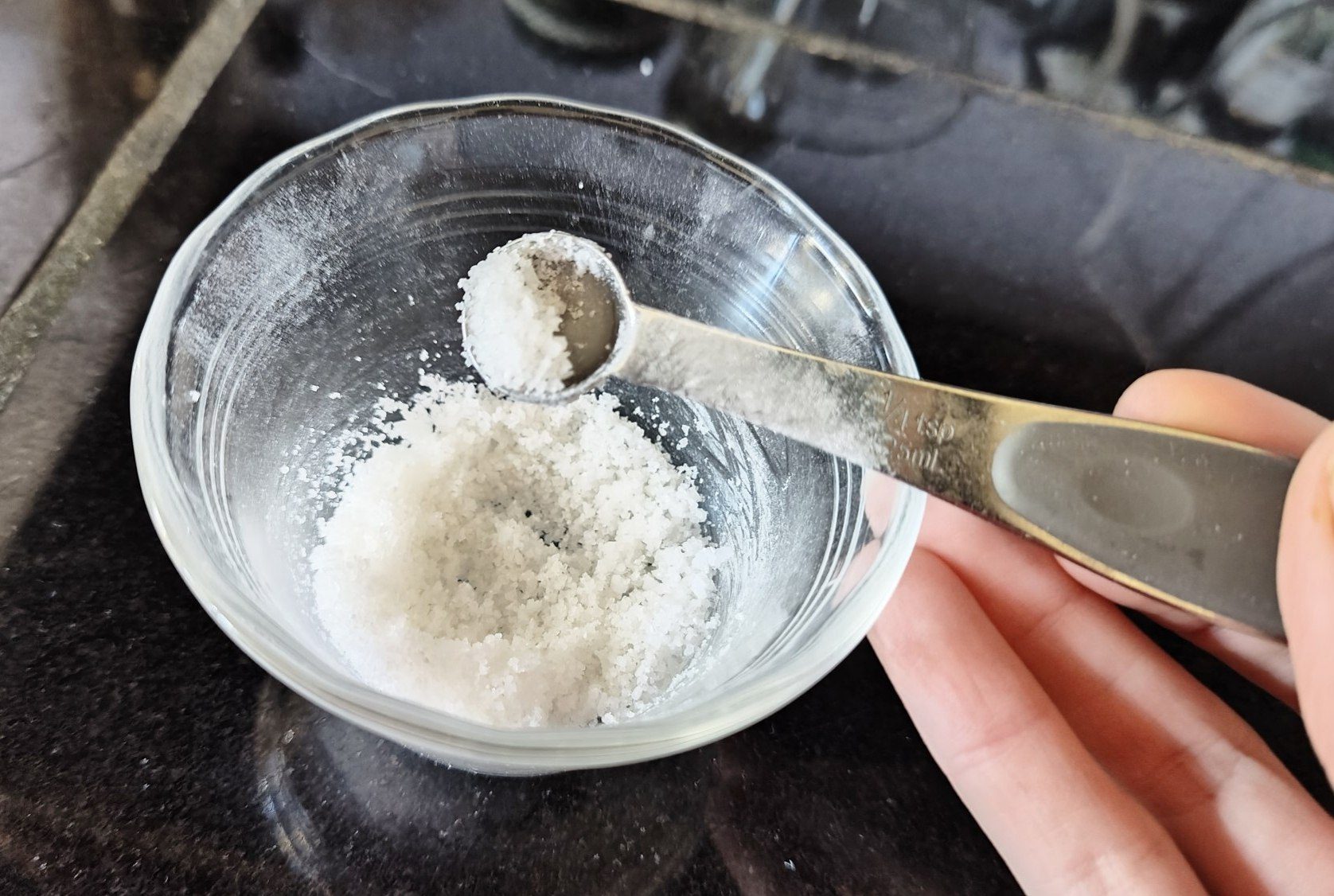
To mix these together, I grab a tiny little glass cup, tare my scale, weigh the sodium and potassium salts, add my magnesium, and then mix it all together with a spoon.
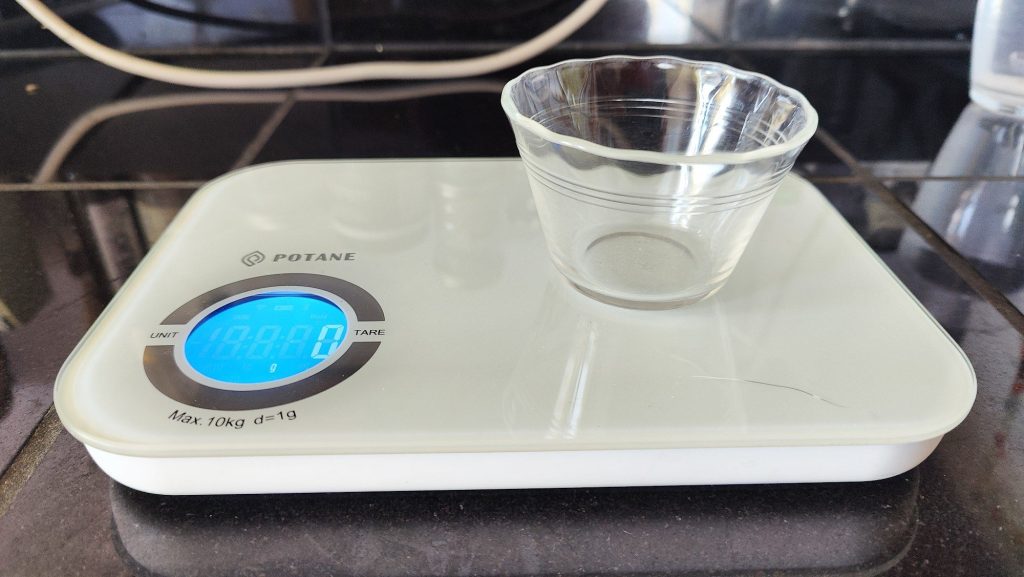
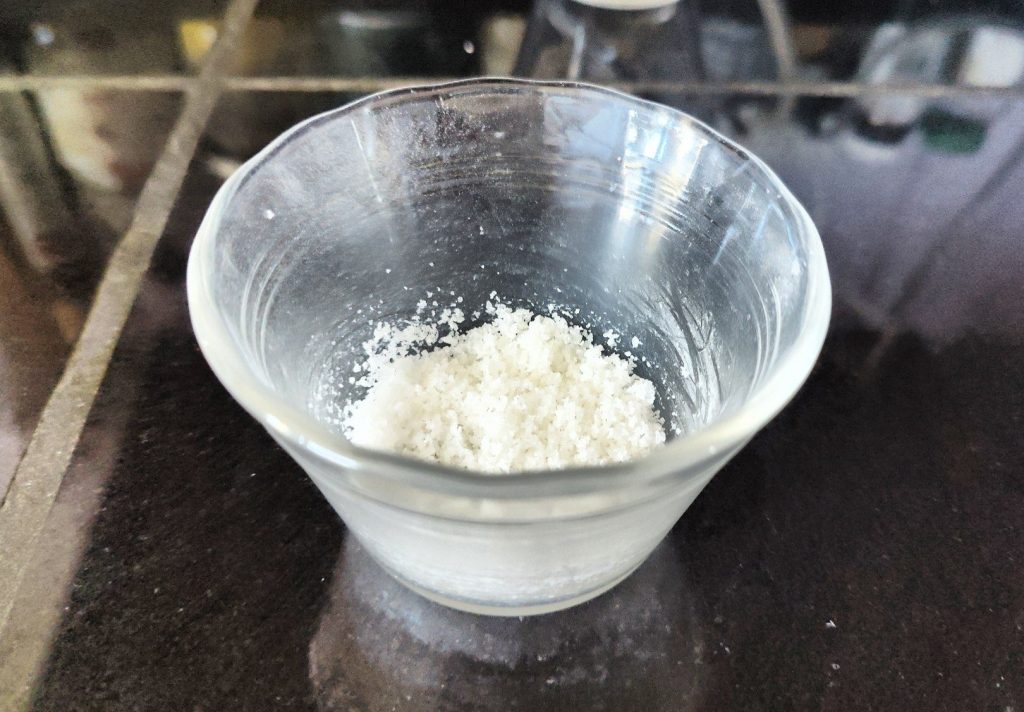
For each 12 ounce glass of water I drink, I add an 1/8 teaspoon of this mix (half a 1/4 tsp), and I find this works splendidly for me. You might need to experiment to see what works for you, but I’d expect this might be a good place to start!
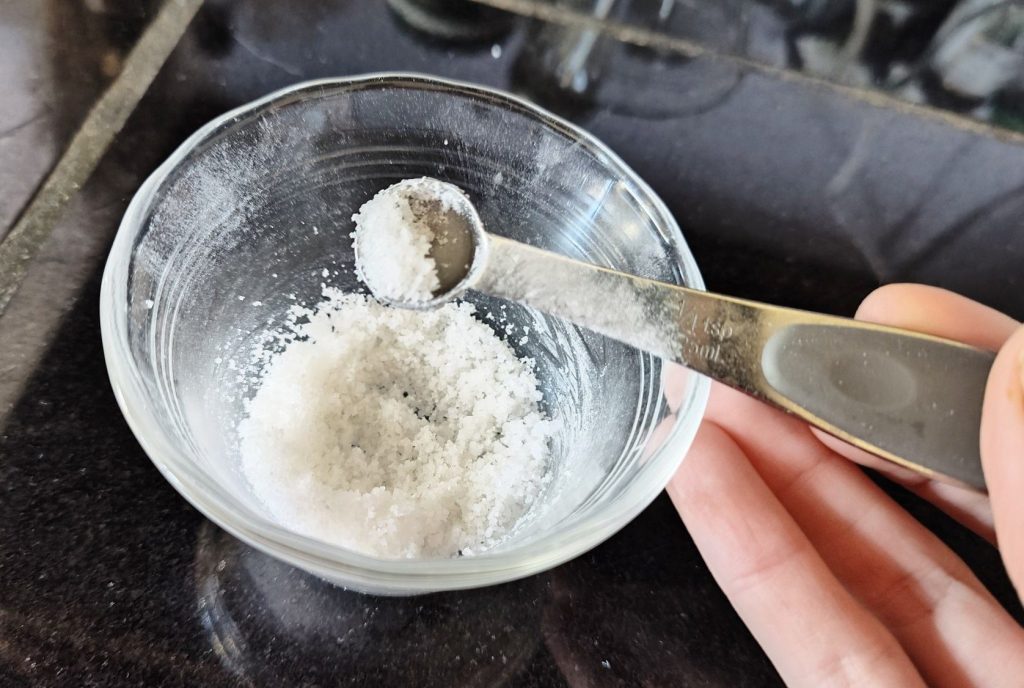
A funny side note: I find that the potassium salt lends a milky flavor to my water, which I actually enjoy, but it’s quite a strange thing at first! It turns out cow’s milk is higher in potassium than sodium or magnesium, so it’s likely the presence of potassium that gives it this milky taste!
Optional additions
Sometimes, if I’m in the mood for some extra flavor, I’ll add a squeeze of lemon to my glass of electrolyte water. Lemons and limes are great options for keto, since they have virtually no sugar! However, occasionally I’ll even add just a tiny splash of my homemade kombucha if I don’t have lemons around.
And… here’s the shortened recipe!
Keto Electrolyte Powder Recipe
Equipment needed:
- Kitchen scale
- Tiny cup
- 1/4 teaspoon measuring spoon
Ingredients:
- Ordinary salt (ideally a sea salt with trace minerals, like this one): 10 g
- Potassium chloride: 2 g (big bag sold here or smaller container here)
- Powdered magnesium capsules: Around half a capsule
Instructions:
- Gather all the equipment and ingredients.
- Put the little cup on the scale and tare it.
- Weigh out the sea salt and potassium chloride.
- Add half a capsule of magnesium.
- Mix together with a spoon.
- Add around 1/8 teaspoon to every 12 ounces of water, mixing briefly, adding more or less based on your preference. (I use a 1/4 tsp measuring spoon and fill it halfway to measure the 1/8 tsp.)
Conclusion
I really hope this has helped you feel empowered to make your own keto electrolyte powder! It’s one of the simplest things you can do yourself, so it just makes sense to me not to buy the super expensive LMNT packets or similar products!
I would genuinely be super interested to hear if you try this and how it works for you. I honestly think, even for those of us who aren’t doing keto, electrolytes in our water can be a really good idea, even if only for those amazing trace minerals!
Anyway, I’m wishing you guys all luck with your health endeavors and saving money as you do so. One of the most overwhelming things to me as I’ve embarked on my endless health journey is keeping costs down!
Thanks for being here and enjoy those electrolytes!